Cross-border truck drivers need an eSIM that switches networks automatically at every border crossing without a physical SIM swap, keeping ELD systems, GPS, and dispatch calls online from the first mile in Texas to the last mile in Ontario. Long-haul routes through the US, Canada, and Mexico burn through single-country plans fast, and a dropped connection at a weigh station or border checkpoint costs more than data ever will.
- A-sim's regional eSIM plans cover US, Canada, and Mexico without a carrier swap at each border.
- Cross-border drivers lose connectivity fastest at border zones where roaming networks overlap and conflict.
- Install the eSIM before departure — most border areas have weak signal for new activations.
- Multi-country data plans beat single-country SIMs for drivers running the same lanes weekly in 2026.
- A-sim app lets you top up data mid-route without pulling over to find a store.
Why eSIM for truck drivers matters
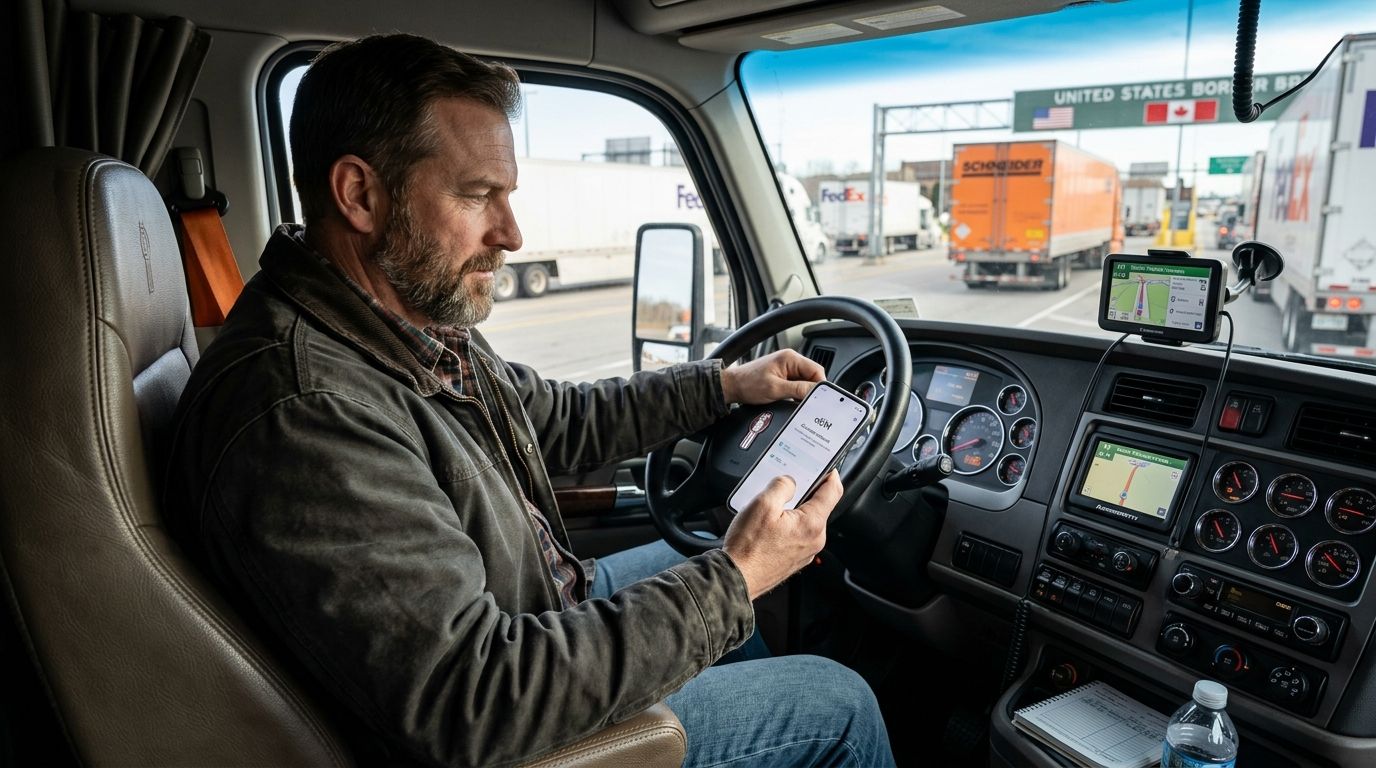
A cross-border driver running Laredo to Toronto crosses at least two international borders and three carrier networks in a single trip. Physical SIMs force a stop at a kiosk or a swap at a truck stop, and roaming charges on a home-country plan stack up fast when ELD pings, dispatch apps, and mapping software all run in the background.
An eSIM solves the switching problem because it's a profile, not a card — you load a regional plan covering all three countries before you leave the yard, and the phone or router picks up the strongest local network automatically. No dead zone at the border booth. No waiting on a store clerk in a language you don't speak.
For drivers running the same corridor weekly, this isn't a convenience issue — it's a compliance and cost issue. ELD data has to transmit in real time, and dispatch needs a live line to reroute around closures or inspections.
Map your route and match the plan
Before anything else, figure out which countries your route actually touches, because a single-country eSIM will drop you the second you cross a line on the map.
- List every country your route crosses in a normal week, not just the destination
- Check whether your carrier plan bundles those countries or charges per-border roaming
- Confirm the plan covers rural highway corridors, not just major cities — border towns often sit outside metro coverage maps
- Note any weigh stations or inspection points known for weak signal and plan a data buffer around them
Install before you leave the yard
Activate the eSIM profile while you still have solid Wi-Fi or LTE, because border zones are the worst place to troubleshoot a new install.
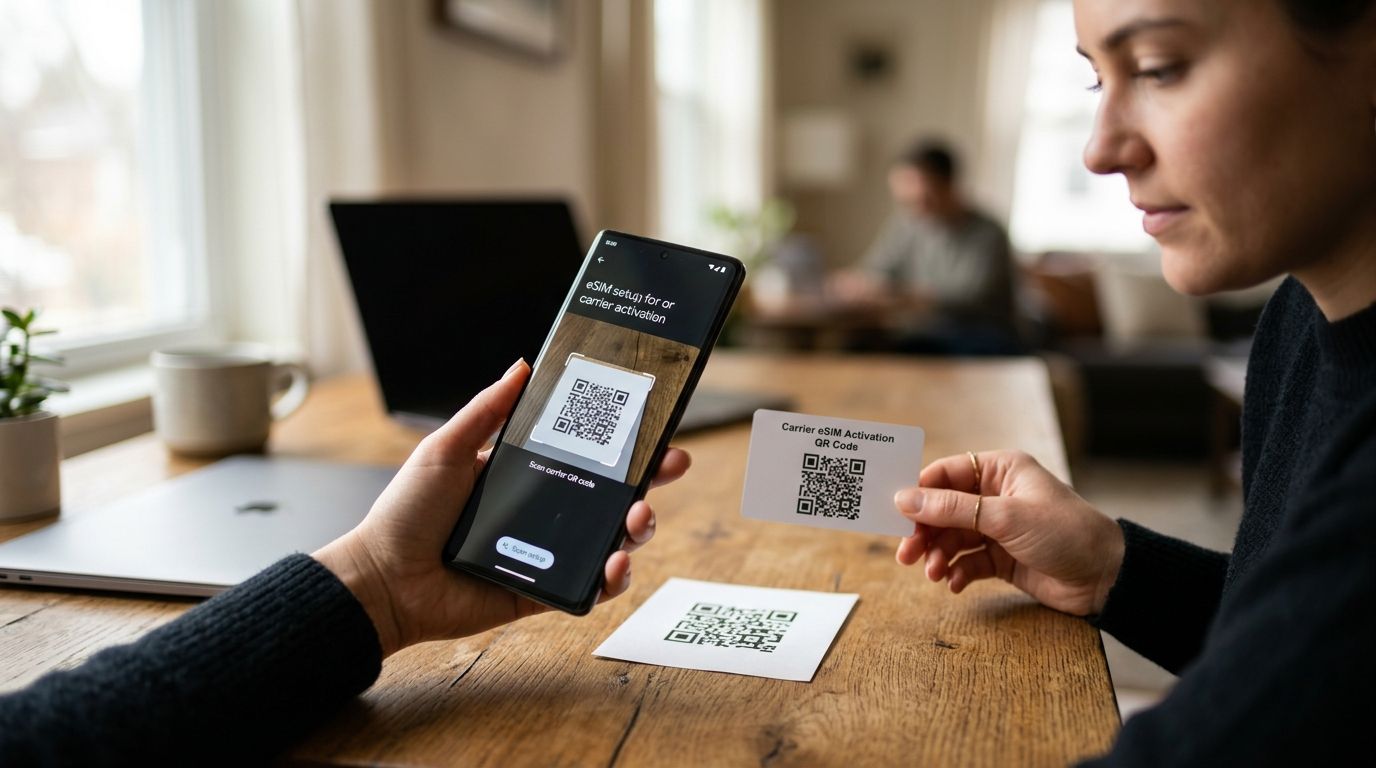
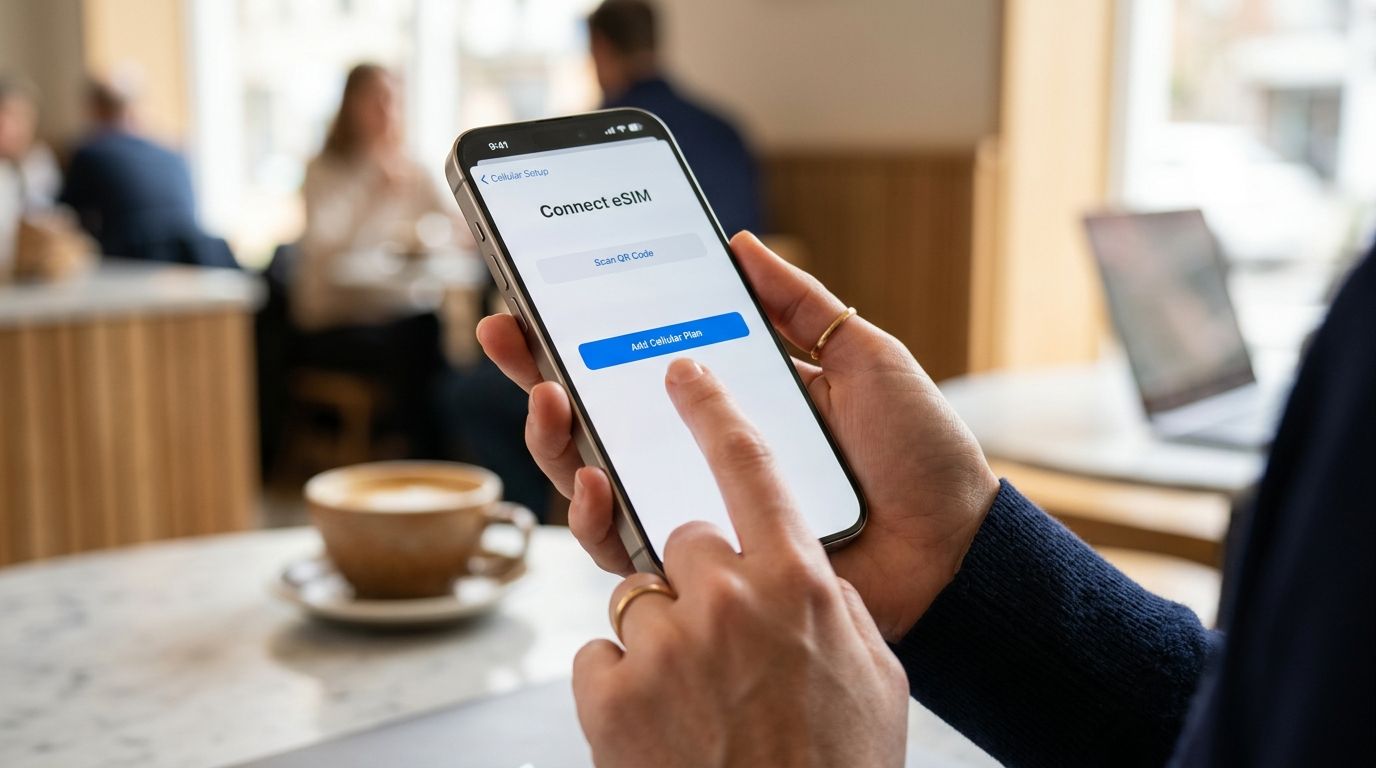
- Scan the QR code or use the app-based install at the depot, not at the checkpoint
- Confirm the eSIM shows "active" in phone settings before pulling out
- Test a data call or map load to confirm the profile is actually routing traffic
- Keep your old SIM or eSIM profile active as a fallback for the first trip on a new plan
Check border-zone coverage specifically
Border areas have overlapping tower signals from both countries, which sometimes causes phones to lock onto a weaker network instead of the strongest one.
- Toggle airplane mode on and off if signal doesn't switch automatically after crossing
- Manually select network in settings if auto-select picks a weak tower
- Test connectivity a mile past the checkpoint, not right at the booth, where towers are congested
Manage data usage on the road
ELD transmission, GPS tracking, and dispatch messaging run constantly, so data caps matter more for truckers than for a typical traveler doing email and maps.
- Track usage through the eSIM's companion app rather than guessing until you hit a wall
- Set a mid-trip alert at 75% of your data allowance so you're not caught short two states from the next stop
- Turn off background app refresh on apps you don't need live — most GPS and ELD tools don't need five other apps syncing in the background
- Download offline maps for the corridor as a backup in case data runs thin
A-sim's app shows real-time usage by country, so a driver running US-Canada-Mexico lanes can see exactly which leg of the trip burns the most data and adjust the next plan accordingly.
Top up without stopping
Running out of data mid-route used to mean pulling into a truck stop and hoping the counter clerk sold SIM top-ups. With an eSIM, the top-up happens from the cab.
- Add data through the app while parked at a rest stop, no store visit needed
- Set auto-topup if your plan supports it, so you never run dry mid-shift
- Keep a card on file specifically for data top-ups so it's a one-tap action, not a login-and-search exercise
Good route planning software matters just as much as the data plan running underneath it — pairing a stable eSIM connection with dedicated GPS and route planning apps keeps rerouting and traffic data flowing even when a dispatcher can't reach you by phone.
Handle multi-country routes efficiently
Drivers running the same corridor every week should treat the eSIM plan like a recurring cost line, not a one-off purchase.
- Set a recurring monthly or per-trip plan matched to your actual route frequency, not a generic "just in case" bundle
- Compare regional plans against buying three separate single-country eSIMs — regional almost always wins on cost per crossing
- Reassess quarterly if your lanes change; a plan built for US-Mexico runs won't serve a driver who picks up Canada routes in 2026
Get a cross-border eSIM plan
Cover US, Canada, and Mexico on one A-sim profile, no border swaps.
Comparison: connectivity options for cross-border drivers
| Option | Best for | Key limitation |
|---|---|---|
| A-sim regional eSIM | Drivers running recurring US/Canada/Mexico lanes | Requires a compatible unlocked phone or router |
| Physical SIM per country | Drivers who cross rarely, once or twice a year | Requires a swap and a store visit at each border |
| Home-carrier roaming plan | Drivers who stay mostly domestic with occasional crossings | Roaming charges add up fast on frequent lanes |
| Fleet-issued satellite unit | Remote routes with no cell coverage at all | Higher cost, overkill for standard highway corridors |
A-sim's regional eSIM wins for drivers who cross the same borders weekly because the plan loads once and switches networks automatically, no swap, no roaming surprise. Verdict: Buy for recurring corridors, Skip for a single one-off crossing.
Common mistakes cross-border truck drivers make
- Buying a single-country eSIM for a multi-country route. Drivers assume the destination country matters most and forget the transit country in between drops connection entirely.
- Installing the eSIM at the border instead of at the yard. Weak signal at checkpoints makes new activations fail exactly when you need them most.
- Ignoring background data drain from ELD and fleet apps. These run constantly and eat the allowance faster than map use alone.
- Assuming roaming on a home plan is cheaper than a dedicated eSIM. Per-border roaming fees on three-country routes usually cost more than one regional plan.
- Not testing the eSIM before the first real trip. A profile that shows "active" in settings still needs a live data test before you're two hours into a route with no fallback.
FAQ
What's the best eSIM for truck drivers crossing the US-Canada-Mexico corridor?
A regional eSIM covering all three countries on one profile is the best fit for recurring cross-border routes in 2026, since it switches networks at each border without a manual swap. Single-country eSIMs only work if you're not crossing back and forth on the same trip.
Does an eSIM work for ELD and GPS while crossing borders?
Yes, as long as the eSIM plan covers every country on the route, ELD transmission and GPS tracking keep running through the border crossing. The connection gap most drivers hit comes from a plan that only covers the destination country, not the transit country.
Can I top up my eSIM data without stopping at a store?
Yes, most eSIM providers including A-sim let you add data through the app from the cab, with no store visit required. Auto-topup settings prevent running dry mid-shift on long hauls.
Is a regional eSIM cheaper than roaming on a home-carrier plan?
For drivers crossing borders weekly, a regional eSIM plan almost always costs less than per-border roaming fees stacked on a home-country plan. Roaming charges compound at each crossing, while a regional plan is a single flat cost for the whole corridor.
Do I need a new phone to use an eSIM as a truck driver?
No, most phones from the last several years support eSIM, including most iPhones and Android models used for dispatch and navigation. Check settings for "Add eSIM" or "Cellular Plans" before installing.
What happens if I lose signal right at the border checkpoint?
Border zones often have overlapping tower signals that confuse auto-network-select. Manually selecting the network in phone settings after crossing usually restores a stronger connection within a minute.
Should I buy a separate eSIM for each country I drive through?
No, for anyone crossing the same countries on a recurring basis, a single regional eSIM is simpler and cheaper than juggling three separate country profiles. Separate SIMs make sense only for a one-off trip through a country you won't revisit.
One last thing
The biggest connectivity failure for cross-border drivers isn't the border itself — it's the 20 miles on either side of it, where towers from both countries overlap and phones default to the weaker signal instead of the stronger one. Manually selecting network mode once you're clear of the checkpoint fixes this in under a minute, and it's the single habit that separates drivers who stay connected on every crossing from those who lose signal every single time.