Relocating abroad means your phone needs a working number and data plan before your feet touch the ground, and an eSIM for expats solves that problem without a trip to a local carrier store or a wait for a physical SIM to arrive. A-sim lets you install a data plan in one tap from the app or website before you leave, so connectivity is live the moment you land in 2026.
- An eSIM for expats installs digitally before departure, so you land with working data instead of hunting for a SIM shop.
- Regional and single-country eSIM plans from A-sim (a-sim.io) cover global, regional and single-country needs from one app.
- iPhone XS and later, and most Android flagships since 2018-2019, support eSIM — check your model before you commit.
- Keep your home SIM active for banking OTPs while your eSIM handles daily data in your new country.
- Manage usage and top-ups directly in-app instead of calling a foreign carrier's support line.
Why eSIM for expats matters
Expats face a different connectivity problem than tourists. A two-week vacationer needs data for ten days; someone relocating needs a number that survives bank verifications, delivery apps, ride-hailing signups, and months of daily use in a country where they don't yet have a local ID to open a carrier contract.
A physical SIM from a local carrier often requires a residence permit, a local address, or an in-person visit — exactly the paperwork an expat hasn't finished yet in week one. An eSIM for expats sidesteps that: you install a data plan from A-sim before departure and you're online the second your flight lands, without standing in a queue at an airport kiosk.
The stakes are higher too. Expats need data reliable enough for job interviews, apartment hunting, and video calls home — not just enough to check a map. That changes which plan type, which backup, and which top-up habit actually make sense.
How to set up eSIM connectivity for your move
Choose the right eSIM plan type for your relocation timeline
Not every expat needs the same coverage. Someone moving to one country for a two-year contract has different needs than someone doing a slow, multi-country relocation.
- Single-country plan: best when you're settling in one place long-term and want the largest local data allowance.
- Regional plan: fits expats who'll cross borders often, like someone based in Lisbon but working across the EU.
- Global plan: covers scouting trips across multiple continents before you pick a final base.
- Match the plan to your actual itinerary, not your ideal one — buying regional coverage you never use wastes money.
- Review country-specific options like the Europe eSIM guide or the USA eSIM guide if your move is destination-specific.
Check device compatibility before you fly
This is the step expats skip and regret. An eSIM only works on eSIM-capable hardware, and not every phone sold globally has it unlocked.
- iPhones from the XS generation (2018) onward generally support eSIM, but carrier-locked or China-market models often don't.
- Most Android flagships from Google, Samsung, and others released since 2019-2020 support eSIM; budget Android models frequently don't.
- Confirm your phone is carrier-unlocked — a locked phone can block eSIM installation even on compatible hardware.
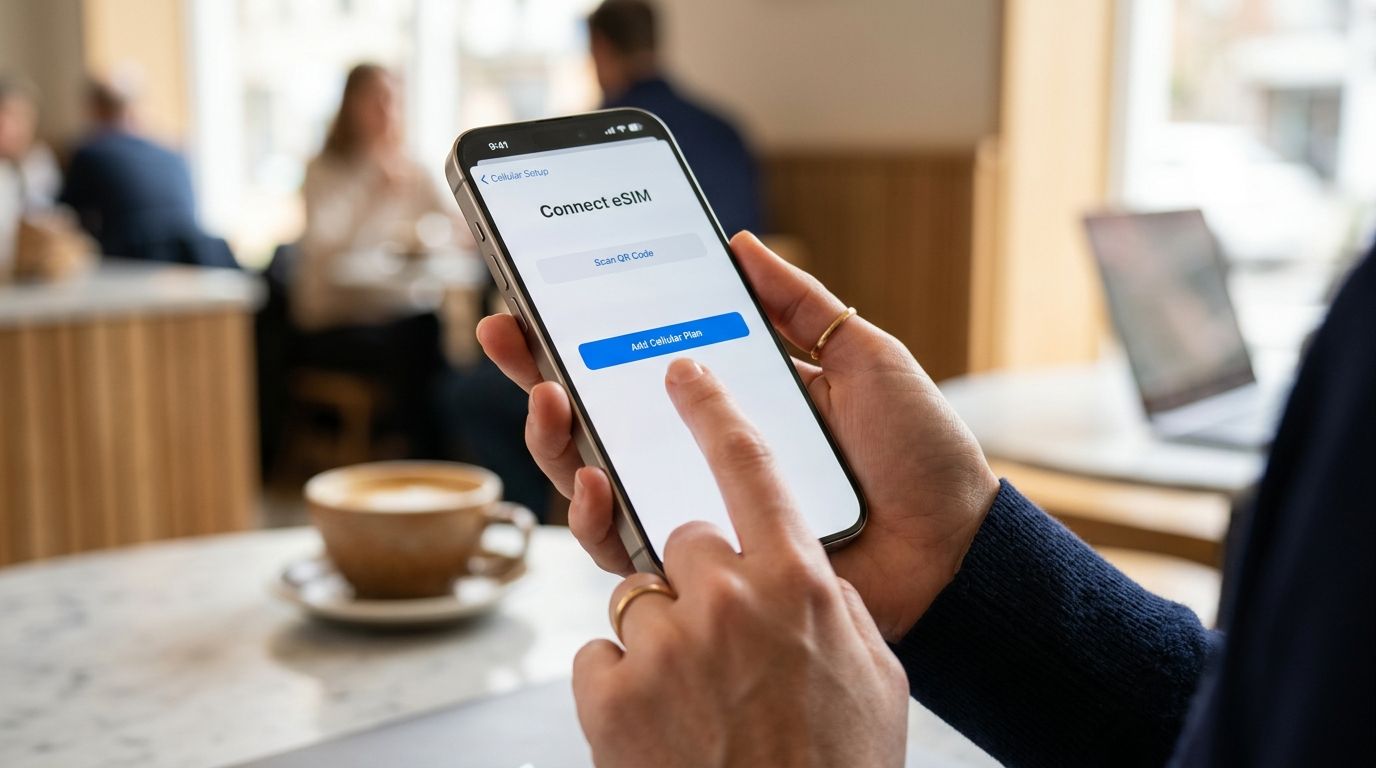
- Check under Settings > Cellular (iPhone) or Settings > Network & Internet (Android) for an "Add eSIM" option before you assume it works.
- If you're unsure, test the install at home on Wi-Fi, not at the airport gate.
Activate before departure, not after landing
Expats who wait to buy data until they land waste their first hours in a new country offline, disoriented, and unable to call a ride.
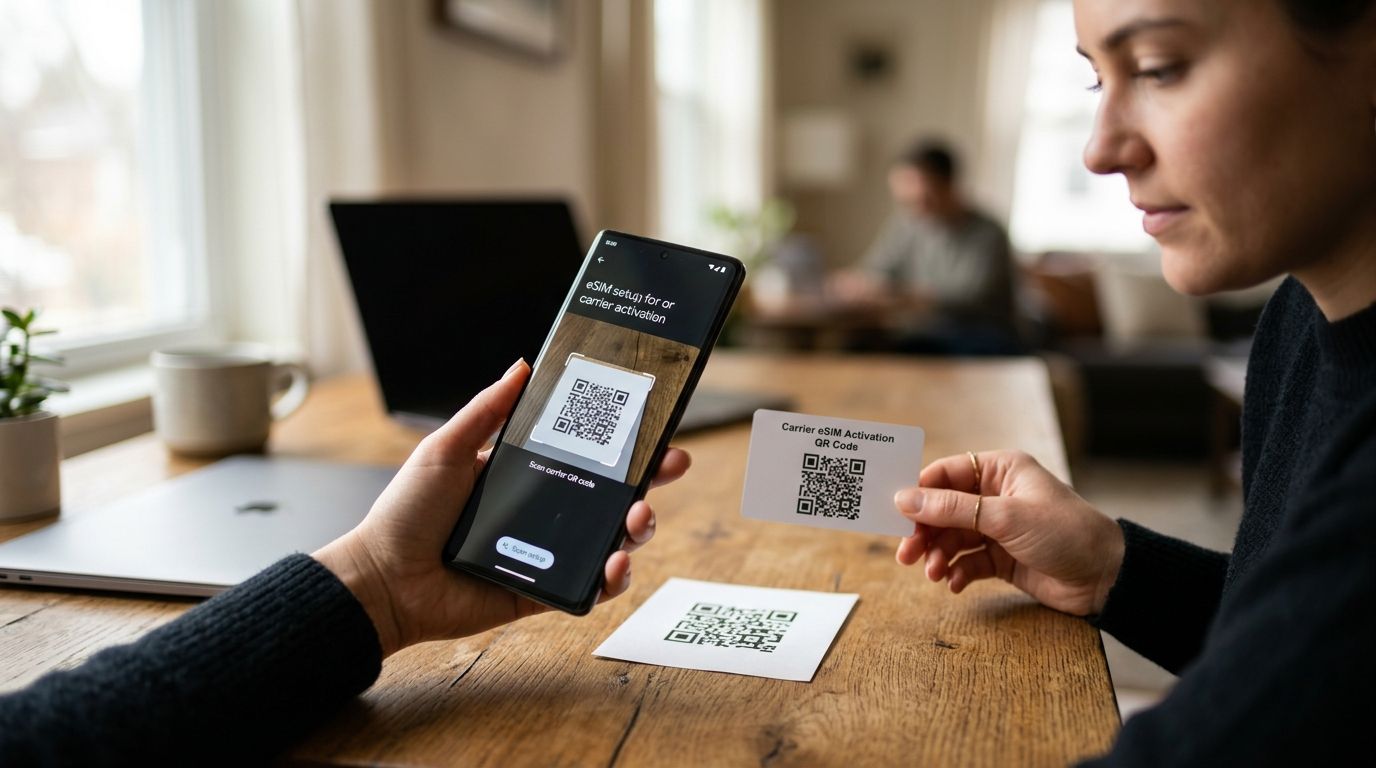
- Install the eSIM profile at home over Wi-Fi — most eSIMs let you install the profile ahead of time and activate data only once you arrive.
- Screenshot or save your QR code/activation details separately from your phone, in case setup needs a redo.
- Test that data actually connects before you board, not after.
- Keep your home carrier's eSIM or physical SIM slot free for now — you may need it for one-time codes.
Set up data management and top-ups
Once you're living somewhere, data needs shift from "enough for a trip" to "enough for a life." Streaming, video calls to family, and work VPNs eat allowances fast.
- Check usage weekly in-app rather than getting surprised by a depleted plan mid-month.
- Top up directly through the A-sim app instead of hunting for a local recharge shop.
- Set a calendar reminder near your renewal date so you're never caught with zero data on a Monday morning.
- If your allowance runs out consistently, move up to the next plan tier rather than buying repeated small top-ups.
Keep a local number path for banking and deliveries
Some services — banks, government portals, food delivery apps — still expect a local-format number, and an international data eSIM alone won't always cover that.
- Ask your new employer or landlord early whether a local number is actually required for anything official.
- Some banking apps accept your home country number for two-factor authentication — don't cancel your home SIM until you've confirmed.
- If a local number becomes necessary, most phones support dual SIM (physical + eSIM, or dual eSIM), so you don't have to give up your travel eSIM to get one.
Build a backup connectivity plan
Expats who rely on a single data source are one outage away from missing a job call or a landlord's message.
- Keep your home SIM in airplane-mode standby as a fallback for emergencies.
- Note down your building's or neighborhood's public Wi-Fi options in the first week.
- If you're working remotely, test your eSIM's speed for video calls before committing to it as your only connection during work hours.
Manage usage and renewals monthly
Relocation is rarely a fixed six-month stay — plans change, contracts extend, and data needs shift as you settle in.
- Review your plan every 30 days against actual usage, not what you guessed before you moved.
- Switch plan type (single-country to regional, or vice versa) in-app if your travel pattern changes.
- Cancel or downgrade before auto-renewal if you're heading home or moving again.
Get set up before you fly
Install your eSIM plan from the app or website in one tap.
Comparison: connectivity options for expats
| Option | Best for | Key limitation |
|---|---|---|
| Single-country eSIM plan | Expats settling long-term in one country | Doesn't cover cross-border trips without a new plan |
| Regional eSIM plan | Expats working across a multi-country region | Broader coverage but less local data density per country |
| Global eSIM plan | Expats scouting multiple countries before settling | Priced for breadth, not for single-country heavy use |
| Local physical SIM | Long-term residents with a permit and local ID | Requires paperwork many new expats don't have yet |
| Home carrier roaming | Short overlap periods only | Roaming fees stack up fast over weeks or months |
Verdict: for most expats relocating in 2026, a single-country or regional A-sim eSIM plan installed before departure beats waiting for a local SIM contract. It skips the paperwork problem and gets you connected from hour one.
“If your phone was released before 2018, check eSIM support before you book flights — not after you land.”
Common mistakes expats make with eSIM setup
- Buying data for a tourist trip length, not a relocation. A 10-day tourist eSIM runs out in week two of a six-month move — size the plan to your actual stay.
- Cancelling the home SIM too early. Banking apps and government portals often still need that number for verification codes during the transition.
- Assuming every phone brought from home is eSIM-ready. Budget Android models and carrier-locked phones frequently aren't, and expats find out at the worst possible time.
- Skipping the pre-departure install. Waiting until landing to set up an eSIM means arriving disconnected during the most logistically demanding hours of a move.
- Ignoring renewal dates. A lapsed plan mid-relocation cuts off maps, translation apps, and ride-hailing right when you need them most.
FAQ
What is the best eSIM for expats relocating abroad in 2026?
A single-country or regional eSIM plan installed before departure works best for most expats in 2026, since it covers long-term daily data without waiting on local carrier paperwork. A-sim offers both single-country and regional options through one app.
Can I use an eSIM instead of a local SIM card as an expat?
Yes, for data and many messaging or calling apps an eSIM works fine, though some banks and government services still expect a local-format number. Keep your home SIM active for verification codes until you confirm you don't need a local number.
Does my phone support eSIM?
iPhone XS and later generally support eSIM, along with most Android flagships released from 2019-2020 onward, but the phone must also be carrier-unlocked. Check Settings for an "Add eSIM" option before you travel.
How much data do expats actually need per month?
Usage varies by how much streaming and video calling you do, so the right move is checking usage weekly in-app for your first month and adjusting the plan tier from there. A-sim lets you upgrade or switch plan types without losing your number.
Is eSIM better than roaming for expats?
For anything longer than a few weeks, yes — home carrier roaming fees stack up fast over months, while a dedicated eSIM plan is built for extended local use. Roaming makes sense only for short overlap periods during the move itself.
Can I have two eSIMs or an eSIM and physical SIM at once?
Most modern phones support dual SIM, either physical plus eSIM or dual eSIM, so you can keep a home number active alongside your travel eSIM. This is useful for expats who still need their home number for banking.
Do I need a new eSIM for every country I move to?
Not if you choose a regional plan covering the countries on your route; single-country plans work best when you're settling in one place for the long term. Check destination-specific coverage before switching plan types.
When should I activate my eSIM before relocating?
Install the profile at home over Wi-Fi before you fly, then activate data once you land so you're never offline during arrival logistics. This avoids fumbling with setup at an airport with no signal.
One last thing
The detail expats overlook most: your eSIM plan choice isn't permanent. If your relocation route changes — a new job posting, an extended contract, a side trip across a border — you can switch between single-country, regional, and global plans in the app instead of starting over with a new carrier relationship. Treat your first plan as a starting point for 2026, not a year-long commitment.