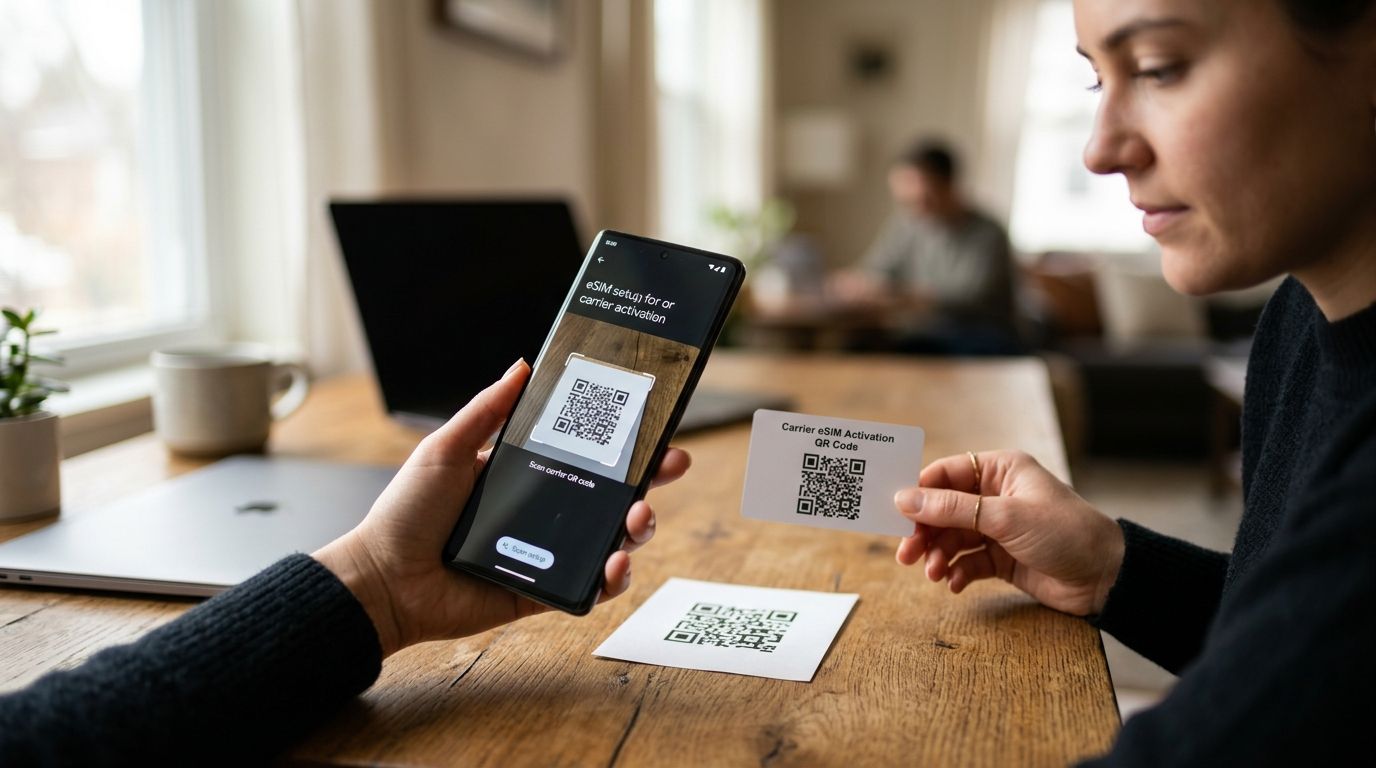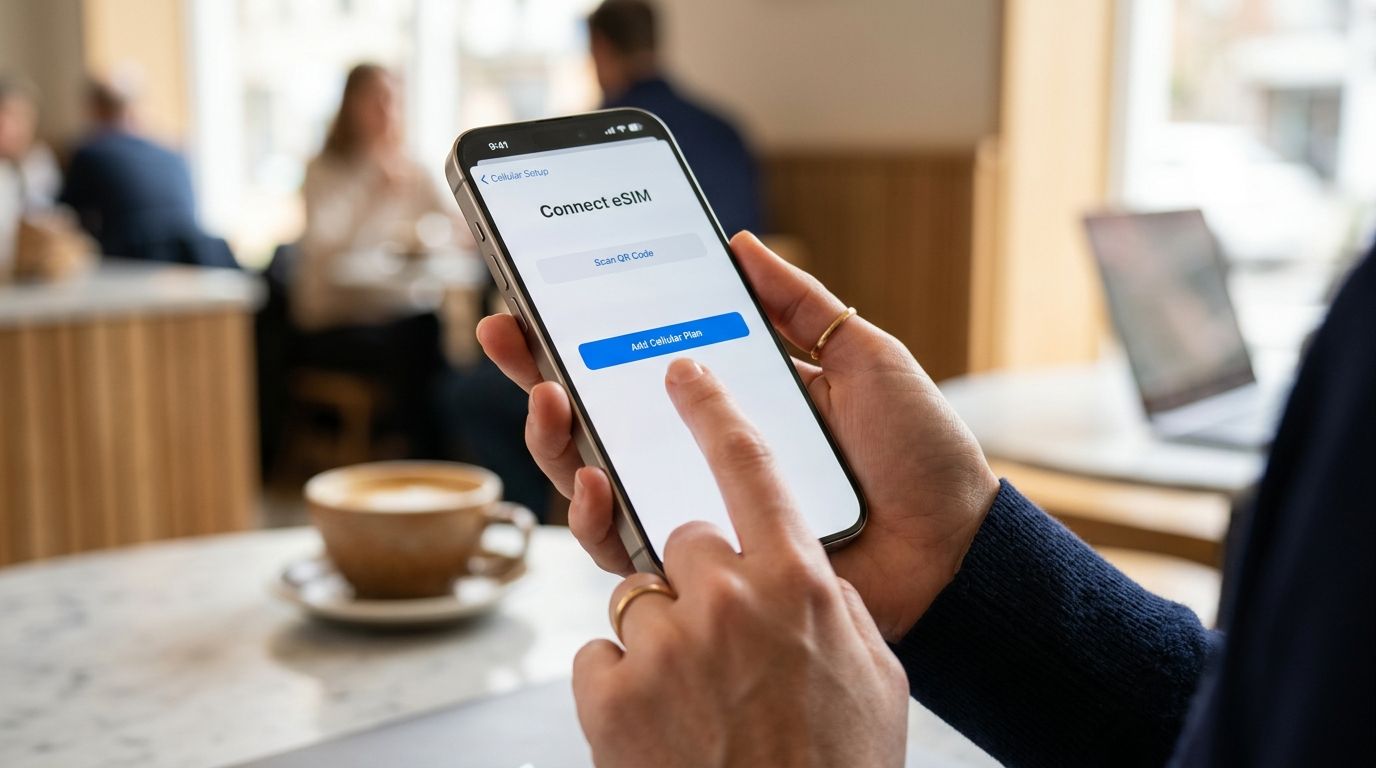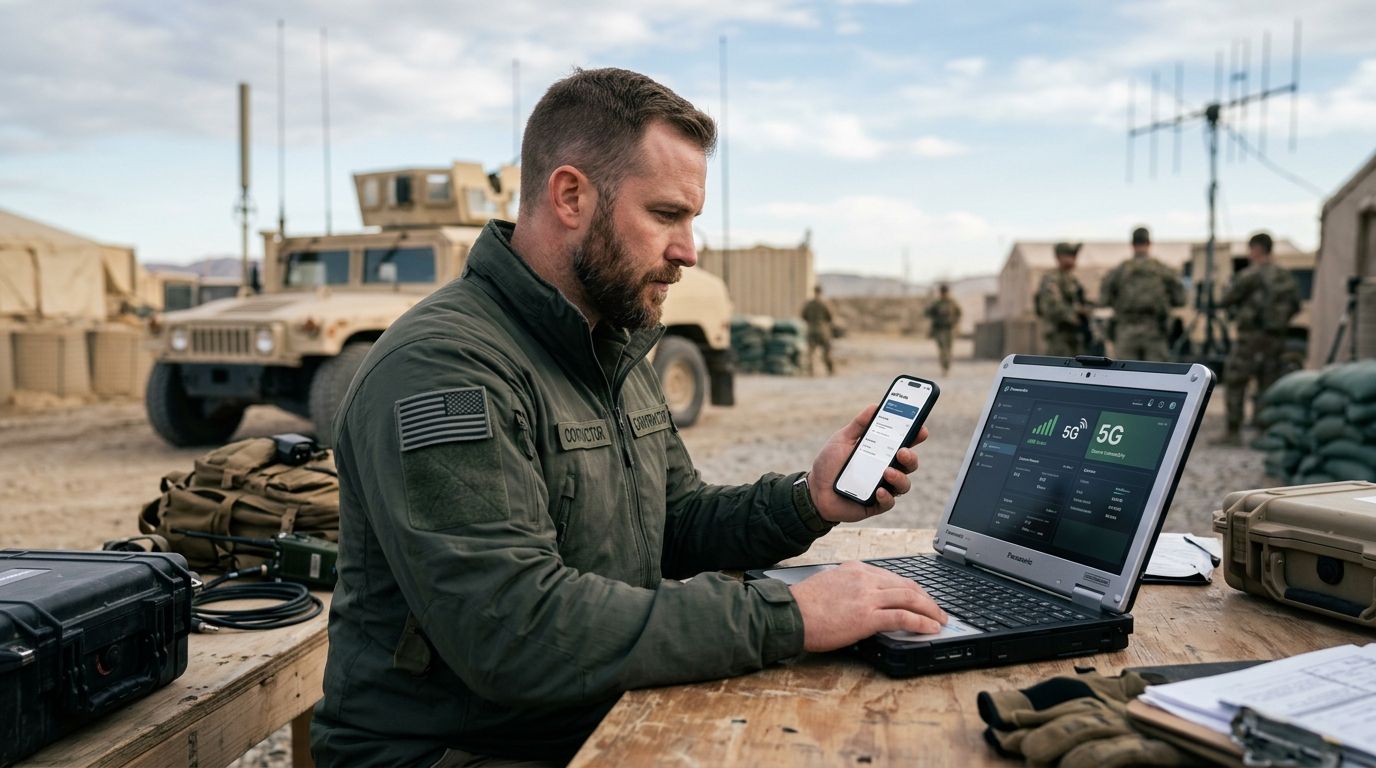
eSIM for military and government contractors solves a specific problem: staying reachable and connected across multiple postings without swapping physical SIM cards or handing your passport to a foreign carrier store. Contractors moving between OCONUS assignments, training rotations, or short-notice travel need connectivity that activates before wheels-down, not after a two-hour queue at a kiosk.
- An esim for military contractors installs by QR code before departure, no physical SIM swap or in-country registration required.
- Regional and global eSIM plans cover multi-country deployments better than single-country local SIMs.
- Dual-SIM keeps your home number active for command and family contact while a data-only eSIM handles work traffic.
- A-sim.io covers business travelers, Europe, the USA, and other single-country and regional destinations from one app.
Why eSIM matters for military and government contractors
Contractors don't travel like tourists. Assignments shift with little notice, itineraries span multiple countries in a single trip, and some postings sit in places where handing over ID to register a local SIM is a documented requirement, not a formality. Several countries mandate passport scans or facial ID capture at the point of SIM purchase — a record trail contractors on sensitive assignments are trying to avoid.
An eSIM removes that step. You install it from the A-sim app or website before you leave, and it activates the moment you land, no storefront visit, no ID handover, no waiting on a local vendor's hours. For anyone managing a security clearance or working under a non-disclosure agreement with a contracting agency, that's not a convenience — it's a reduction in exposure.
Dual-SIM functionality also matters more here than for a leisure traveler. Contractors need a home number reachable by command, family, or agency dispatch while running a second, data-only line for local connectivity. One phone, two lines, no carrier switch mid-assignment.
How military and government contractors set up eSIM for deployment
Confirm your device is eSIM-compatible and unlocked
Not every government-issued or personal device supports eSIM, and a locked device from a previous carrier contract will block activation regardless of eSIM support.
- Check for eSIM support before travel orders are finalized, not the night before departure
- Confirm the device is carrier-unlocked, especially if it was issued under a domestic contract
- Test dual-SIM toggling at home first — cellular and data settings differ by manufacturer
- Keep the physical SIM tray empty as a backup slot if the device supports it
Match the eSIM region to the real itinerary, not the primary posting
A single-country plan works for a fixed assignment. A multi-country deployment or training rotation needs regional or global coverage instead.
- Use a single-country eSIM for a fixed-base posting with no cross-border travel
- Use a regional eSIM when the assignment covers a cluster of nearby countries
- Use a global eSIM for rotating assignments or short-notice reassignment
- Check the best eSIM for business travelers guide when the trip mixes work stops with personal time
Install and activate before departure
Activating on arrival wastes the first hours of a deployment window when connectivity to command or family matters most.
- Install the eSIM profile via QR code while still on home Wi-Fi
- Confirm activation status in the app before boarding, not after landing
- Save the QR code or activation record offline in case the device needs a reinstall
- Test data connectivity on airport Wi-Fi before switching to cellular data abroad
Separate work and personal traffic with dual-SIM
Contractors juggling agency communications, personal contact, and per-diem tracking benefit from keeping lines distinct rather than routing everything through one number.
- Assign the data-only eSIM to work apps, secure messaging, and timekeeping tools
- Keep the home SIM active for voice calls from command or family
- Set the data-only line as the default for data to avoid accidental roaming charges on the home line
- Label each line clearly in phone settings to avoid sending the wrong outbound number
Track and top up usage without contacting a carrier
Contractors on per-diem or expense-tracked travel need visibility into data usage without a phone call to a foreign call center.
- Check remaining data and expiration inside the app, not through a carrier hotline
- Top up directly from the app when a posting extends past the original plan
- Set a low-data alert before a long field assignment with limited connectivity
- Keep a record of top-up dates for expense reporting
Build a backup plan for restricted or remote postings
Some postings sit outside standard cellular coverage or in countries where data access is restricted or monitored.
- Confirm eSIM data coverage for the specific region before departure, not after arrival
- Carry a backup connectivity method for remote field sites with no cellular tower access
- Check local data restrictions in advance for countries with monitored or filtered internet access
- Keep offline maps and contact numbers saved locally in case data access is delayed
Comparison: connectivity options for contractors
| Option | Best for | Key limitation |
|---|---|---|
| Local SIM card | Fixed single-country posting with time to visit a carrier store | Requires ID registration and a storefront visit, both extra exposure |
| Home carrier roaming | Short trips where cost isn't a factor | Roaming rates add up fast on multi-week deployments |
| Single-country eSIM | Fixed-base assignments with no cross-border travel | Doesn't cover unplanned trips outside the country |
| Regional or global eSIM | Multi-country rotations and short-notice reassignment | Coverage depth varies by carrier partner in each country |
| Satellite messenger | Remote field postings with no cellular coverage | Data-only messaging, not a full connectivity replacement |
A regional or global eSIM is the practical default for any contractor whose orders could change destination with short notice — it skips the storefront ID requirement entirely and activates before the plane lands.
“If a country requires a passport scan to register a SIM, that's a record trail contractors on sensitive assignments are trying to avoid.”
Common mistakes contractors make with eSIM
- Waiting until arrival to activate. The first hours of a posting are when command and family contact matters most — activate on home Wi-Fi before departure.
- Buying a single-country plan for a multi-country rotation. Orders change; a regional or global plan absorbs a reroute without a new purchase.
- Routing all traffic through one line. Mixing work and personal contact on a single number makes per-diem tracking and OPSEC harder than it needs to be.
- Ignoring device compatibility until departure week. A locked or non-eSIM device discovered at the airport forces a scramble for a local SIM under the exact conditions eSIM is meant to avoid.
- Assuming every country has the same coverage depth. Regional plans vary by carrier partner — check coverage for the specific country on the itinerary, not just the region name.
Set up connectivity before your next posting
Install a regional or global eSIM from the app before departure.
FAQ
What's the best eSIM for military contractors?
A regional or global eSIM works best for contractors because it covers multi-country rotations without requiring a new plan for each destination. Single-country plans only make sense for fixed-base assignments with no cross-border travel.
Do military bases block eSIM data?
eSIM data runs over standard commercial cellular networks, so it isn't blocked by the eSIM technology itself. Coverage on or near a specific base depends on local network infrastructure, which varies by country and carrier partner.
Can I use eSIM in restricted or high-security countries?
eSIM works in most countries with commercial cellular coverage, but some regions restrict or monitor internet access regardless of SIM type. Check the specific country's data policy before departure rather than assuming eSIM bypasses local restrictions.
Is eSIM safer than a local SIM for government travel?
Yes, in the sense that eSIM installs remotely and skips the storefront ID registration many countries require for physical SIM purchase. That reduces the paper trail tied to your travel and identity.
Does eSIM work during OCONUS deployment?
eSIM works anywhere the device has commercial cellular coverage, which includes most OCONUS postings. Remote field sites without cellular towers still need a backup connectivity method regardless of SIM type.
Can I keep my home number active while using an eSIM abroad?
Yes, dual-SIM devices let you keep a home SIM active for voice calls while running a data-only eSIM for local connectivity. This is standard on most eSIM-compatible iPhones and Android flagships.
What happens if my device is lost or the eSIM profile is wiped?
Most eSIM apps let you reinstall the profile on a replacement device using your account login, without needing a new physical SIM. Keep your activation record or account credentials saved separately from the device itself.
How do I top up an eSIM plan while deployed?
Top-ups run through the app directly, without a call to a foreign carrier or a storefront visit. This matters most in postings where contacting a local call center isn't practical.
One last thing
The detail contractors overlook most: an eSIM profile installed on home Wi-Fi before departure is fully active before the flight lands, which means the window between landing and first contact with command or family drops to zero instead of the hour or more a storefront SIM purchase usually costs.