Sales reps and consultants who cross borders every month need an eSIM built for constant movement: one phone number, multiple country data plans, and no airport kiosk lines between flights. This guide breaks down how to set one up, what mistakes cost reps the most missed calls, and which connectivity option actually holds up on a five-city circuit.
- An esim for sales reps keeps one business number active while switching data plans across countries in 2026.
- A-sim's global eSIM installs in one tap and works alongside your existing SIM, so client calls never drop.
- Physical SIM swaps and carrier day-pass roaming both create gaps that cost reps client calls mid-trip.
- Set up your eSIM 24 hours before departure, not at the gate, to avoid dead-zone arrivals.
- Regional eSIMs fit reps working one territory; global eSIMs fit consultants jumping continents in the same week.
Why esim for sales reps setups matter for this segment
A sales rep landing in Frankfurt on Monday and Warsaw on Thursday can't afford a dead phone between flights. Consultants close deals over calls booked around client time zones, not around whatever wifi the hotel lobby has that day. Missing a callback window because a physical SIM hasn't activated yet, or because a carrier roaming pass expired mid-flight, is a lost account, not an inconvenience.
This segment also travels on tight, back-to-back itineraries where there's no time to visit a carrier store or queue at an airport kiosk. The best esim for business travelers generally needs to activate before departure, cover more than one country per plan, and keep the rep's existing business number reachable for calls and two-factor codes. That's a different bar than a two-week vacation SIM.
Install your eSIM before you leave, not at the gate
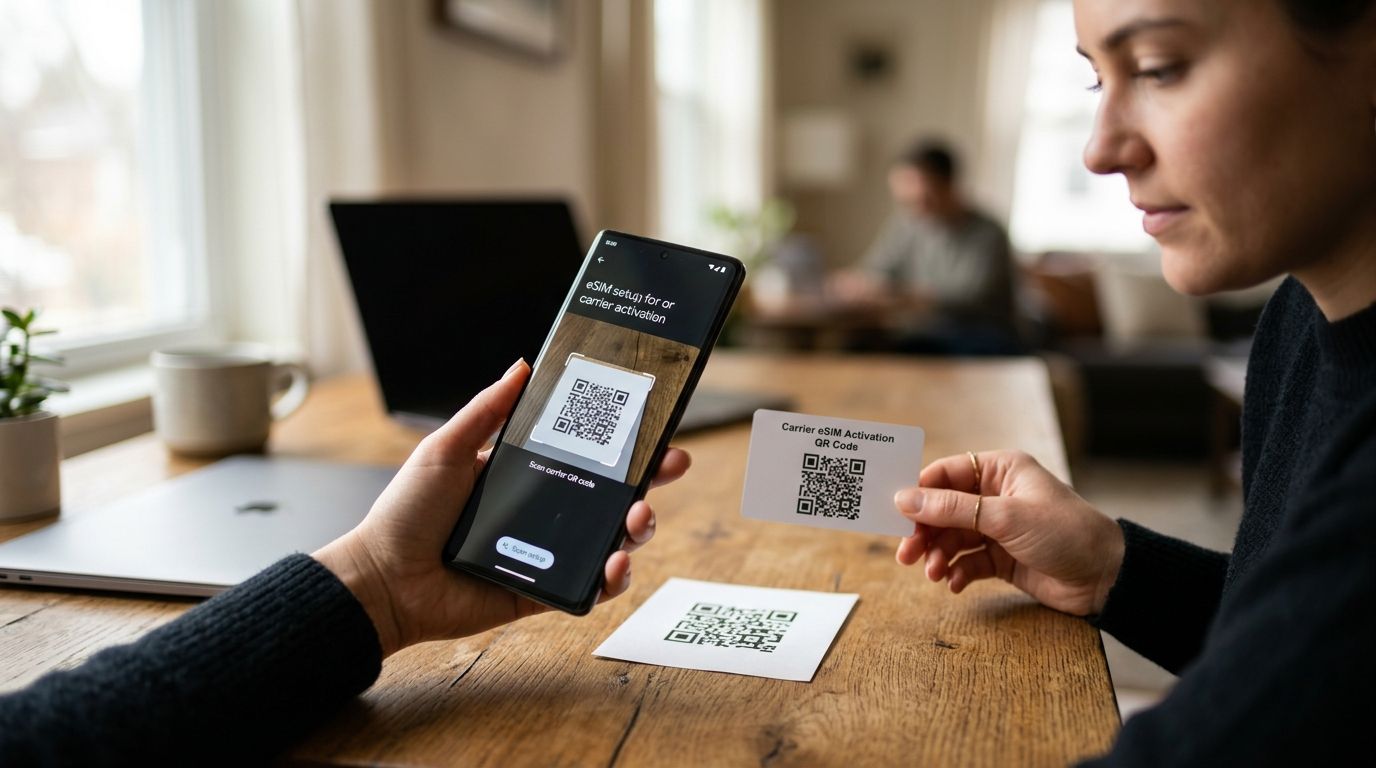
Most activation failures happen because reps wait until they land, then can't reach a network to download the profile. Install and test the profile while you still have home wifi or data.
- Download the eSIM profile at least 24 hours before departure
- Confirm the profile shows "active" or "ready" in your phone's cellular settings before boarding
- Keep your physical or existing eSIM as your default for calls and texts
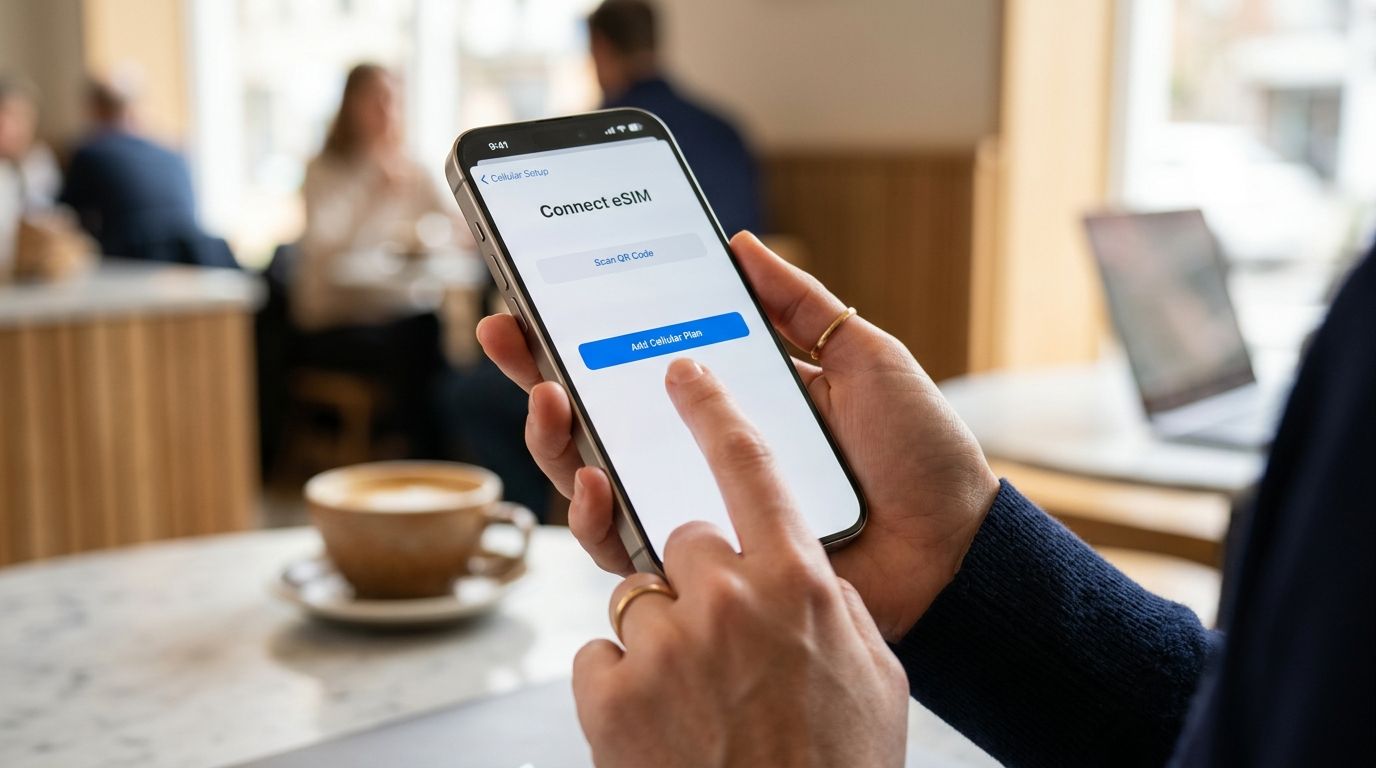
- Set the new travel eSIM as your data-only line
- Screenshot the QR code or activation confirmation in case you need to reinstall
Set up dual-SIM so your business number never drops
A phone with dual-SIM support lets you run your home carrier line for calls and SMS while a travel eSIM handles data in the country you land in. This is the single biggest fix for reps who've lost a client callback to a dead line abroad.
- Check your phone supports dual eSIM or eSIM plus physical SIM (most iPhones since XS and Android flagships since 2019 do)
- Route calendar invites and 2FA codes to your home number, not the travel line
- Turn on data roaming only for the eSIM, never for your home carrier line
- Label both lines in settings ("Home" and "Travel") so you don't send a client text on the wrong number
- Test a call and a data session before you leave the airport wifi zone
Match your plan to your actual itinerary, not your longest stop
A consultant doing three countries in one week wastes money and time buying a new local SIM at every border. A global eSIM built for multi-country travel covers the whole circuit under one setup.
- Map every country on the trip before choosing a plan
- Pick a regional plan (Europe, Southeast Asia) if the whole trip stays in one zone
- Pick a global plan if the itinerary crosses continents in the same week
- Check the data allowance against your actual usage: video calls and screen-shares over hotel wifi use far less cellular data than calls made on the go
- Avoid single-country plans unless the whole trip is one stop
Monitor usage and top up before you run out mid-meeting
Running out of data during a client presentation is worse than running out during downtime. Build a habit of checking usage the way you'd check your calendar.
- Check remaining data once a day on travel days, and once every two to three days on stationary work weeks
- Top up through the app before a big client day, not the morning of
- Set a personal threshold (20% remaining) as your trigger to top up
- Turn off auto-updates and background app refresh on data-heavy apps while traveling
- Use wifi for large file transfers and cellular data for calls and email
Build a backup plan for high-stakes meetings
Even a well-set-up eSIM can hit a dead zone in a rural venue, an underground conference hall, or a country with weaker network coverage. Reps who never miss a call plan for this in advance.
- Confirm the venue's wifi password before the meeting starts
- Keep a second eSIM or physical SIM as backup on a different network
- Download call-in numbers or dial-in details offline in case data drops
- Tell key clients you may call from a different number while traveling
- Test connectivity at the venue 15 minutes before the meeting, not during it
Track data usage and cost for expense reports
Consultants billing travel back to a client or firm need a clean record of what was spent and why. An app-based eSIM makes this far easier than a physical SIM bought in cash at a kiosk.
- Screenshot the purchase confirmation and country coverage for each plan
- Log top-ups by trip in the same expense sheet as flights and hotels
- Separate personal data use from client-billable travel data where required
- Keep the receipt trail digital; app purchases beat paper receipts from foreign SIM vendors
Set up your travel eSIM before the next trip
Install in one tap and keep your business number active across borders.
Comparison: connectivity options for traveling sales reps
| Option | Best for | Key limitation |
|---|---|---|
| Physical roaming SIM | Reps on a single-country trip with time to swap SIM trays | Requires a physical swap and risks losing your home number mid-trip |
| Carrier day-pass roaming | Reps who want to stay on their existing carrier network | Costs stack fast across multiple countries and offer little usage visibility |
| Local prepaid SIM on arrival | Consultants staying weeks in one country | Airport lines, language barriers, and a new number at every border |
| Global eSIM (A-sim) | Consultants on multi-country circuits in the same trip | Needs an eSIM-compatible phone |
| Regional eSIM (A-sim) | Reps working repeat trips in one region, like Europe | Less useful if the itinerary jumps continents mid-trip |
A global eSIM is the practical call for any rep whose itinerary crosses more than one country on the same trip, because it removes the SIM-swap step entirely. For reps who mostly stay in one territory, like a rep covering only Europe accounts, a regional plan is lighter and usually enough.
Common mistakes traveling sales reps make
- Buying a new local SIM at every border. It eats travel time between meetings and changes your number each stop, which confuses clients trying to reach you.
- Waiting until landing to activate the eSIM. Airport wifi is unreliable and some profiles need a data connection to finish activation, leaving you offline right when you land.
- Relying entirely on hotel wifi for client calls. A single dropped connection during a pitch call costs more credibility than the price of a data plan.
- Letting the home SIM go inactive while abroad. Some carriers deactivate a line after extended non-use, which means missed calls on the number clients actually have saved.
- Choosing a single-country plan for a multi-country trip. It forces a second setup mid-trip, exactly when you have the least time to deal with it.
Consultants running long stints in one place, like digital nomads working from a single city for a month, face a different problem: usage volume over multiple weeks, not border-crossing. The setup principle is the same, but the plan size should match a month of daily calls and file transfers, not a week of hopping cities.
FAQ
What's the best esim for sales reps who travel weekly?
A global eSIM that covers multiple countries under one plan works best for reps traveling weekly, since it removes the need to swap SIMs at every border. Look for one that installs in a single tap and runs alongside your existing business number.
Is an eSIM better than carrier roaming for business travel?
An eSIM is generally better for multi-country trips because roaming day-passes stack in cost and offer little visibility into usage until the bill arrives. eSIM apps show remaining data in real time and let you top up before you run out.
Can I keep my business phone number while using a travel eSIM?
Yes, on a dual-SIM phone your home number stays active for calls and texts while the travel eSIM handles data only. This is the setup most traveling consultants use to avoid missing client calls.
How early should I activate my eSIM before a business trip?
Activate and test the eSIM at least 24 hours before departure while you still have reliable wifi or data. Activating at the airport or after landing risks a failed setup with no backup connection.
Do I need a different eSIM for every country on a multi-city trip?
No, a global or regional eSIM plan covers multiple countries under one profile, which is built for exactly this kind of itinerary. Single-country plans only make sense if the entire trip stays in one place.
What phones support eSIM for business travel in 2026?
Most iPhones since the XS and Android flagships released since around 2019 support eSIM, and many current models support two eSIM profiles at once. Check your phone's cellular settings for an "Add eSIM" option before buying a plan.
How much data does a sales rep need for a week abroad?
It depends on how many video calls happen over cellular data versus wifi, but reps who take most calls over hotel or venue wifi use far less data than those doing calls on the move. Match the plan to your actual call habits, not just trip length.
Can I top up my eSIM mid-trip if I run low on data?
Yes, most travel eSIM apps let you top up directly from your phone without needing a new profile or a store visit. Set a personal threshold, like 20% remaining, as your cue to top up before a big client day.
One last thing
The reps who never miss a client call aren't the ones with the biggest data plan, they're the ones who test the connection before they need it. Run a call and a data session the moment you land, not when you're already walking into the meeting. That one habit catches more dead-zone problems than any amount of extra gigabytes.