Packing the right amount of eSIM data for two weeks abroad is mostly guesswork until you match it to how you actually use your phone on a trip — and getting it wrong means either paying for data you never touch or hunting for wifi on day 10.
- A 2-week trip abroad needs about 15GB of eSIM data for moderate use in 2026, ranging from 5GB light to 30GB+ heavy.
- Hotspot use for a laptop is the single biggest hidden data drain on any trip.
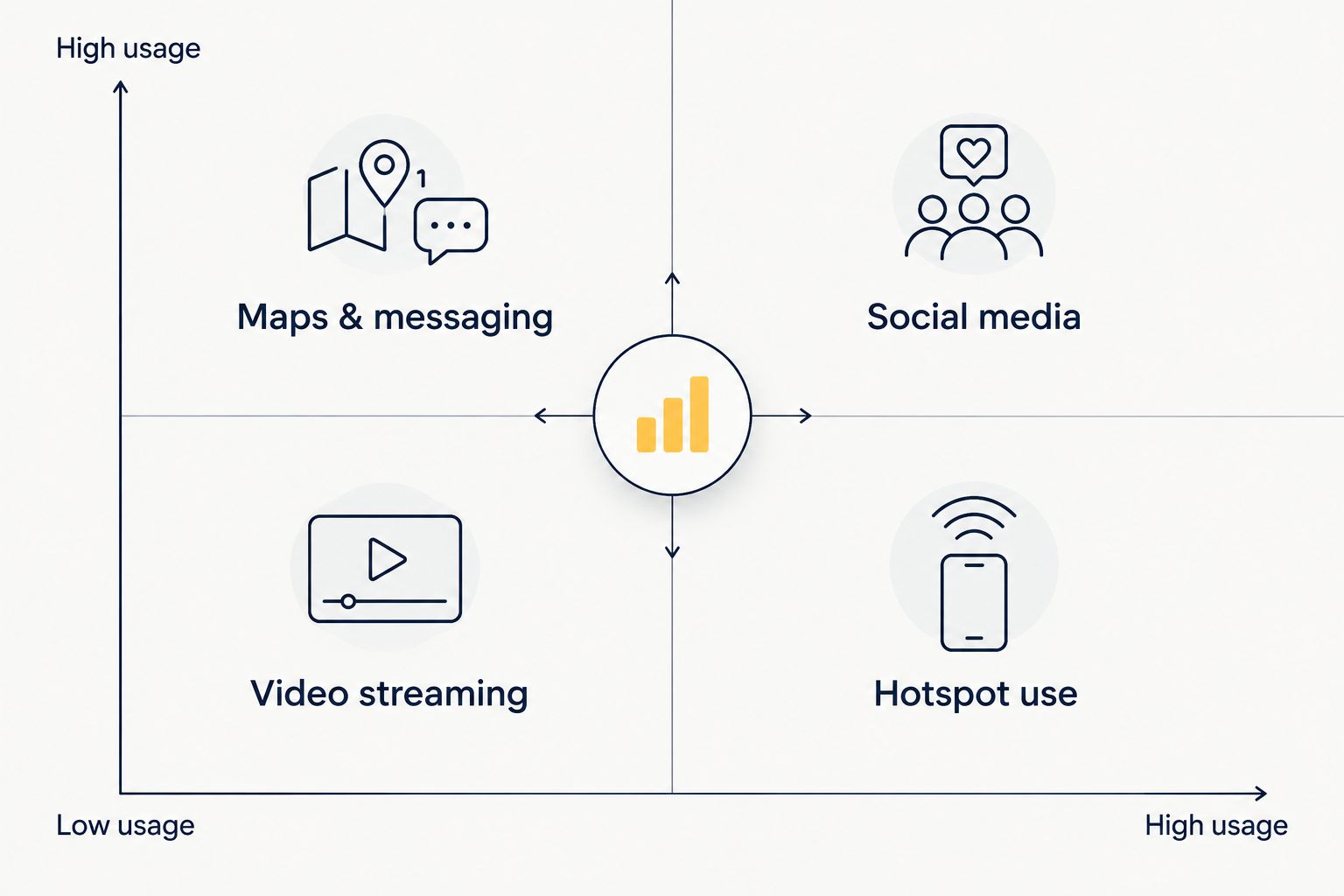
- Video streaming and video calls burn data fast; maps and messaging barely register.
- A-sim lets you check usage and top up mid-trip without finding a local SIM shop.
Why this matters
Overbuying data on a 14-day trip means paying for gigabytes that sit unused. Underbuying means either an awkward mid-trip top-up scramble or falling back on hotel wifi for navigation you need on the street.
Most travelers land somewhere between 5GB and 30GB for two weeks, and the gap between those numbers comes down to two habits: how much video you watch, and whether you're using your phone as a hotspot for a laptop. Get those two answers right and the rest of the estimate is easy.
A 2-week trip abroad typically needs about 15GB of eSIM data for moderate daily use in 2026, ranging from 5GB for light, maps-and-messaging-only travel up to 30GB or more for heavy streaming and hotspot use. The number the headline hides: tethering your phone to a laptop for even an hour or two a day can double your total data needs for the trip.
How much eSIM data do you need for a 2-week trip?
Break it down by what you're actually doing on your phone each day, not by a flat daily allowance. Maps and messaging cost almost nothing. Video is where the gigabytes disappear.
| Usage type | Data per day (approx) | 14-day total |
|---|---|---|
| Maps & messaging only | 0.1–0.3GB | 2–4GB |
| Social media browsing + music streaming | 0.5–1GB | 7–14GB |
| Video streaming, 1 hour/day (SD) | ~1GB | ~14GB |
| Video calls, 1 hour/day | 0.3–0.5GB | 4–7GB |
| Hotspot for laptop work | 1–2GB+ | 14–28GB+ |
Stack the rows that match your actual trip and you land close to your real 14-day number. Someone who navigates with maps, texts home, and scrolls social media without much video lands near the low end. Add an hour of Netflix a night and a work video call, and the total climbs fast.
An A-sim eSIM installs before you land, so you can start checking real usage against this table from day one instead of guessing halfway through the trip.
Light traveler: 5GB for a 2-week trip
A light traveler needs about 5GB for a 2-week trip: maps for walking directions, texting on WhatsApp or iMessage, and checking email over data with wifi covering the rest. Best for: travelers staying in hotels with reliable wifi who mainly need data for navigation between stops. Verdict: Buy the 5GB tier if you're not streaming or working off your phone.
Moderate traveler: 15GB for a 2-week trip
A moderate traveler needs about 15GB for a 2-week trip — daily social media with some video content, an hour of music or podcast streaming, occasional video calls home, and maps running constantly. Best for: most leisure travelers who want to post while traveling and stay reachable without babysitting their data. Verdict: Buy the 15GB tier; it covers the median trip without close monitoring.
Heavy traveler: 30GB+ for a 2-week trip
A heavy traveler needs 30GB or more for a 2-week trip — daily video streaming, hotspotting a laptop for remote work, video calls, and heavy social media use with reels and stories. Best for: digital nomads, remote workers, and anyone tethering a laptop to their phone for hours a day. Verdict: Buy the 30GB+ tier or plan on a mid-trip top-up.
Why eSIM data needs vary
- Hotspot/tethering — running a laptop off your phone's connection multiplies data use compared to phone-only browsing.
- Video quality settings — HD streaming can use two to three times the data of standard definition for the same hour of content.
- Social media format — feeds built around video (Reels, TikTok, Stories) use far more data per minute than text-and-photo scrolling.
- Offline map downloads — downloading maps in advance over wifi cuts live navigation data to nearly zero.
- Video calls vs voice calls — a video call over data uses meaningfully more than a voice-only call on the same app.
- Number of connected devices — a tablet or laptop riding on the same eSIM hotspot adds its own usage on top of your phone's.
Check how a week in Europe on eSIM breaks down if you want the same math for a shorter trip — halve most of the 14-day numbers above and you're close.
How much data does Google Maps use per day?
Google Maps uses roughly 5–10MB per hour of active navigation, which is why maps barely move the needle on a 2-week data total even with hours of daily use. Downloading offline maps over wifi before you travel cuts that further, since the app only needs data for live traffic updates and rerouting.
Does video calling use a lot of eSIM data?
Video calling uses noticeably more data than a voice call — roughly 0.3–0.5GB per hour depending on the app and video quality, versus a fraction of that for audio-only. If daily video calls home are part of your routine, budget for the moderate or heavy tier rather than the light one.
Can I top up my eSIM if I run out mid-trip?
Yes — most eSIM providers, A-sim included, let you add data from the app without swapping a physical SIM or finding a local shop. Setting up automatic top-up before your data runs out removes the risk of going offline mid-trip if your usage runs heavier than planned.
Match your eSIM plan to your trip
Install in one tap and track usage from the app the whole trip.
FAQ
How much eSIM data do I need for a 2 week trip?
Most travelers need about 15GB for a 2-week trip in 2026, ranging from 5GB for light, maps-only use to 30GB or more for heavy streaming and hotspot use. Match your daily habits to the usage table rather than guessing a flat number.
Is 10GB enough for 2 weeks abroad?
10GB is enough for 2 weeks if your use is closer to light-to-moderate: maps, messaging, social browsing, and occasional streaming without daily hotspot use. Heavy streamers or anyone tethering a laptop should size up to 20-30GB.
What uses the most eSIM data while traveling?
Hotspotting a laptop and streaming HD video use the most data by far, often several times what maps and messaging use combined. Cutting video quality to standard definition and downloading offline maps ahead of time are the two easiest ways to stretch a data plan.
Does eSIM data work the same as home data?
Yes, an eSIM data plan works the same way your home plan does once it's active — apps, streaming, and hotspot all draw from the same data pool. The difference is regional or country-specific plans are sized for a trip instead of a monthly cycle.
How much data does one hour of video streaming use?
One hour of standard-definition video streaming uses roughly 1GB, while HD streaming can use two to three times that amount. Lowering stream quality in the app settings is the fastest way to cut usage on a data-limited eSIM plan.
Can I check my eSIM data usage during the trip?
Yes, A-sim lets you check remaining data and usage history directly in the app throughout the trip. That makes it easy to catch a heavy-use day early and top up before you run out.
Do I need more data for a family trip than solo travel?
Yes, a family trip needs more data per traveler if multiple phones are streaming, navigating, or video calling separately rather than sharing one connection. Sizing each phone to the moderate tier, around 15GB per person, covers most 2-week family trips.
One last thing
The number that actually breaks most travelers' data budget isn't streaming — it's forgetting their phone is still hotspotting a laptop in the background after a work call ends. Turn off the hotspot when you're done with it, and check the eSIM plans ranked by data speed if speed matters as much as the total gigabytes for your 2-week trip in 2026.