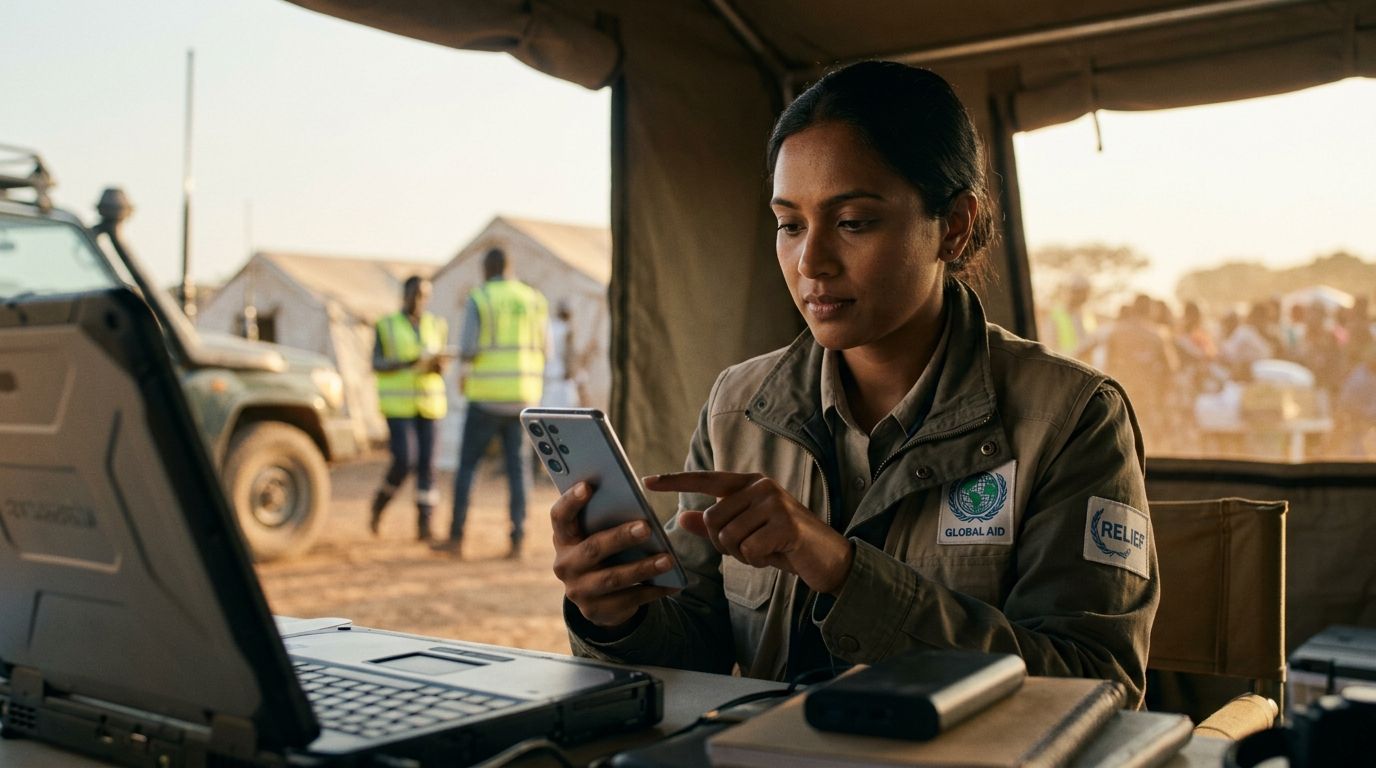
Aid worker eSIM plans have to solve a problem consumer travel SIMs were never built for: staying connected across multiple duty stations, unreliable local networks, and deployment schedules that change with 48 hours' notice. Humanitarian staff need a connectivity setup that activates before they land, keeps their home number reachable, and survives a reassignment mid-mission.
- An esim for aid workers activates before departure, so you land connected without hunting for a local SIM vendor.
- A-sim's regional and global eSIM plans cover multi-country missions without a swap at every border in 2026.
- Dual SIM setups keep your home number live for employer and family contact while a local data line runs.
- Field connectivity gaps in low-infrastructure duty stations are the top planning failure for first deployments.
- Buy connectivity by mission scope, not by country. Single-country SIMs fail when your assignment changes.
Why eSIM connectivity matters for aid workers
Humanitarian deployments don't follow tourist itineraries. A mission can start in one country and shift to a neighbouring one within days, and the carrier decision made before departure has to hold up through all of it.
Field staff also carry a dual communication burden most travellers don't: staying reachable to program managers and family back home while filing reports, coordinating logistics, and pulling GPS data in areas with patchy infrastructure. A physical SIM swap at every border isn't just inconvenient. It's a gap in reachability during exactly the hours a coordinator might need to reach you.
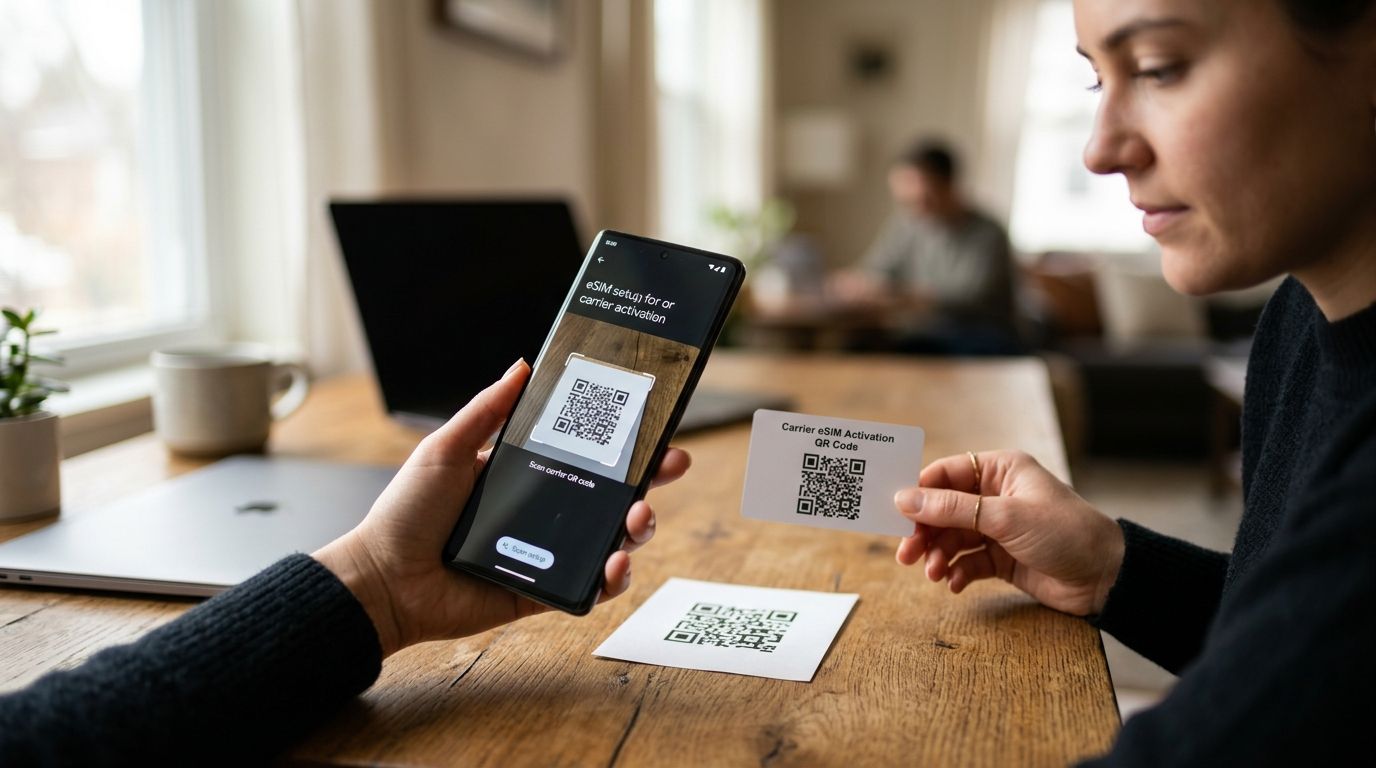
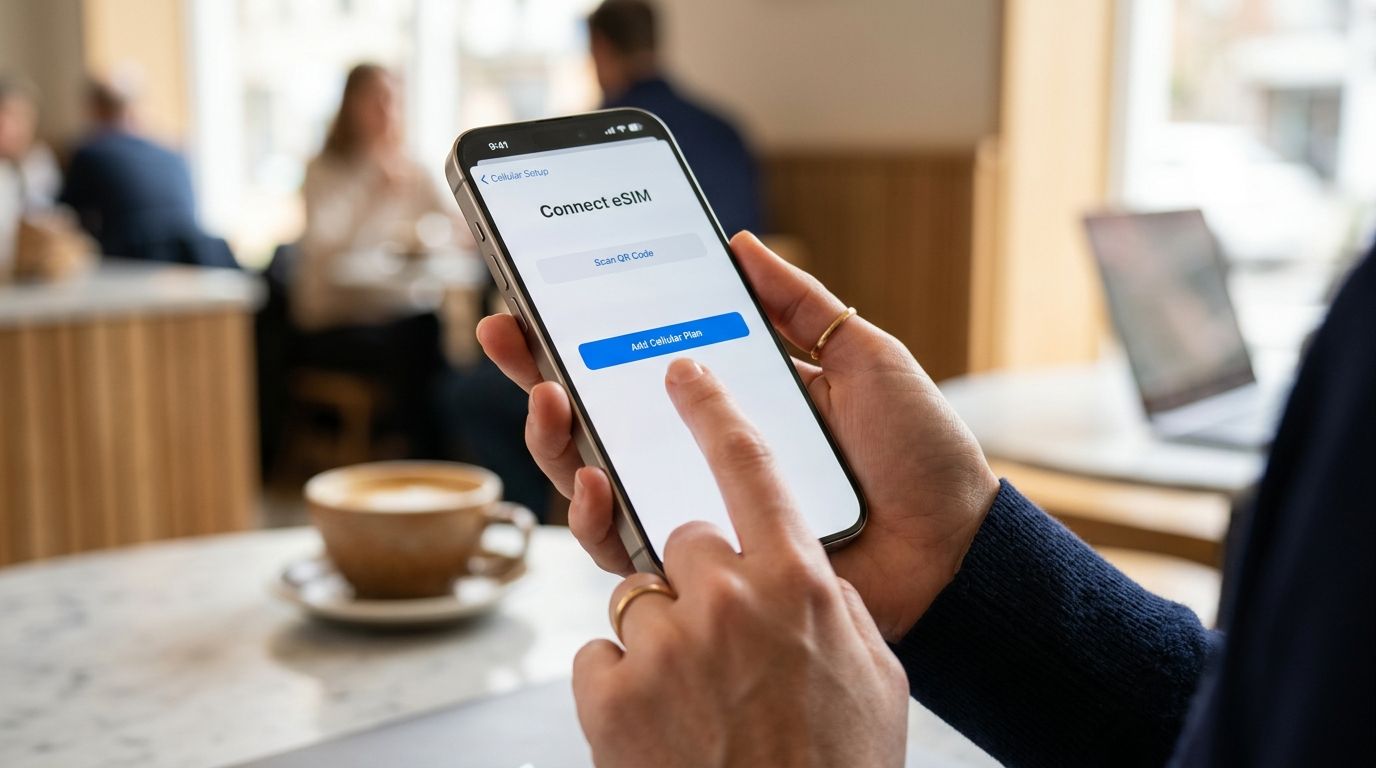
An esim for aid workers removes the swap entirely. You install it before you fly, activate it on landing, and keep your primary number alive on a second slot the whole time. A-sim handles installation, usage tracking and top-ups through one app, which matters when there is no phone shop within 200 km of your duty station.
How to set up connectivity for a 2026 humanitarian deployment
Map your mission scope before you buy anything
Don't buy connectivity for the country on your itinerary. Buy it for the mission. Reassignments inside a region happen often enough that a single-country plan is a bad bet for anyone doing field work in 2026.
- List every country your deployment could realistically touch, not just the first duty station
- Check whether your agency's rotation pattern is single-country or regional
- Confirm your phone supports eSIM before departure. Most iPhones from the XS generation onward and recent Android flagships do
- Ask your security or logistics officer whether the region has any eSIM activation restrictions
Choose regional coverage over stacked single-country plans
If your mission could cross two or three countries in the same region, a regional plan beats stacking single-country SIMs. One balance, one activation, no re-provisioning when the vehicle crosses a border.
- Regional plans cover clusters like Southeast Asia or Europe under one data allowance
- Global plans fit staff rotating between continents inside a single contract
- Single-country plans still work when the posting is genuinely fixed and long
- Read the best eSIM for Southeast Asia in 2026 breakdown if your rotation covers that region
Keep your home number alive with dual SIM
Losing your home number for the length of a deployment is a real risk for anyone whose family or HR department needs a stable contact line. eSIM phones run a physical SIM alongside the data eSIM without a second device.
- Keep your home carrier's physical SIM in slot one for calls and SMS
- Run the field data eSIM in slot two for internet, maps and messaging apps
- Set WhatsApp or Signal as the default so contacts reach you over data, not roaming minutes
- Confirm your home carrier won't deactivate the line after an extended absence
Install before you fly, not after you land
Activation needs a wifi or data connection, which is exactly what field duty stations often lack. The single biggest mistake aid workers make in 2026 is waiting to activate connectivity until they are already in a dead zone.
- Install the eSIM profile on home or airport wifi 24 to 48 hours before departure
- Test the connection once before boarding, not after landing
- Save your activation QR code and confirmation email offline in case you need to reinstall
- Brief a backup contact with your account details in case the device is lost
Build redundancy for connectivity gaps
Humanitarian duty stations sit in exactly the low-infrastructure areas where one provider's coverage can drop out. Treat connectivity like any other field risk and plan for the failure mode.
- Carry two options: an eSIM data plan plus a satellite messenger for genuinely remote posts
- Know your agency's check-in protocol if data coverage disappears for more than 24 hours
- Download offline maps and key documents before entering low-coverage zones
- Keep a paper copy of emergency contacts as the last-resort fallback
Manage usage and top-ups from the field
Situation reports, photo documentation and GPS check-ins burn through data fast. Field staff need to see usage in real time and top up without finding a local retail agent.
- Track data consumption in the carrier app rather than guessing
- Top up remotely through the same app when a mission extends past the original plan
- Set a usage alert threshold so you aren't caught mid-report with zero data
- A-sim's app handles both usage tracking and top-ups from the field
Budget connectivity across the full rotation
Aid workers on repeat rotations pay for connectivity several times a year. Planning per-mission instead of per-trip avoids researching a new carrier every deployment.
- Standardize on one provider across missions so activation becomes routine
- Reuse the same app when briefing new team members on setup
- Size your data allowance against your actual reporting cadence, not a flat guess
- Re-check coverage each rotation. Network quality in conflict and disaster zones shifts fast
Connectivity options compared for humanitarian field work
| Option | Best for | Key limitation |
|---|---|---|
| Local SIM bought on arrival | Fixed single-country postings with time to source one | Physical swap required, drops your home number, hard to buy in remote duty stations |
| Home carrier roaming | Short missions where the employer covers charges | Roaming rates run high and caps hit fast during reporting spikes |
| Regional eSIM plan | Rotations crossing borders inside one region | Network quality varies country to country inside the plan |
| A-sim eSIM, regional or global | Deployments needing pre-departure activation and remote top-up | Requires an eSIM-compatible phone |
Verdict: for aid workers on multi-country or reassignment-prone missions in 2026, a regional or global eSIM activated before departure beats both a local SIM bought on arrival and standard carrier roaming.
“If you land before the eSIM is activated, you are relying on a duty station having wifi. Plan as if it does not.”
Set up field connectivity before you deploy
Install a regional or global eSIM on wifi before departure, in one tap.
Common mistakes aid workers make with field connectivity
- Buying a single-country SIM before the final duty station is confirmed. Missions get reassigned mid-cycle and a locked-in single-country plan doesn't travel with the reassignment.
- Dropping the home number entirely. Losing reachability to family and HR for weeks creates avoidable risk during an already high-stress deployment.
- Waiting until arrival to activate. Activation needs wifi, and a low-infrastructure duty station is the worst place to learn that.
- Ignoring data caps during high-volume reporting weeks. Situation reports with photos and GPS logs consume allowances far faster than casual travel use.
- Running a single point of failure. One provider's coverage gap in a conflict or disaster zone shouldn't be the only weak link in your comms plan.
FAQ
What's the best eSIM for aid workers deploying to multiple countries?
A regional or global eSIM plan activated before departure is the best fit for aid workers on multi-country rotations. It avoids the physical swap and coverage gaps that come with buying a local SIM at each new duty station.
Can I keep my home phone number active while using a field eSIM?
Yes. Dual SIM phones run your home carrier's physical SIM alongside a data eSIM, so calls and texts still reach your original number while data runs through the field plan.
Do I need to activate the eSIM before I travel?
Activation requires a wifi or data connection, so it has to happen before departure or during a layover with wifi. Many remote duty stations have no reliable connection to activate on arrival.
Is an eSIM better than a local SIM card for humanitarian field work?
An eSIM is better for any mission that could cross borders or get reassigned, because it avoids a physical swap and can be topped up through an app. A local SIM still works for fixed, long single-country postings.
How do I top up an eSIM data plan while in the field?
Top-ups run through the carrier's app over any available data connection, with no local retail agent needed. That matters most in areas without accessible phone shops.
What happens if there is no network coverage at my duty station?
No eSIM plan fixes a genuine coverage void, which is why field staff in remote or conflict zones should carry a secondary option such as a satellite messenger alongside the data plan.
Does my phone need to support eSIM for this to work?
Yes. The device needs eSIM compatibility, which covers most iPhones from the XS generation onward and recent Android flagships. Check before departure, not after landing.
Are eSIM plans worth it for short humanitarian missions?
Yes. Short missions still benefit from pre-departure activation and no physical swap, though a single regional plan usually covers the trip without needing the global tier.
One last thing
The detail that trips up first-time field deployments isn't coverage. It's timing. eSIM activation needs an internet connection, and the worst place to discover you skipped that step is a duty station with none. Install and test the profile on home or airport wifi at least 24 hours before you fly, every rotation, no exceptions. Repeat deployers in 2026 who standardize on one provider cut the setup down to a few minutes per mission.