An unused prepaid eSIM is not automatically refundable. In 2026, the answer depends on the refund terms attached to your purchase and what the seller counts as unused: not installed, not activated, or not used for data. Check those terms before deleting the eSIM or buying a replacement.
- Is a prepaid eSIM refundable if unused? Not automatically; the seller's purchase terms decide.
- An installed eSIM and an activated eSIM are not necessarily treated the same under a refund policy.
- Save your order details and usage evidence, then ask the seller for a written decision.
- A-sim suits travelers who want app-based usage management and top-ups; its refund eligibility must be checked separately.
Why this matters
A change of plans can leave you with an eSIM you never used. That fact helps explain your request, but it does not establish a right to a refund. The seller's policy determines what counts as unused and what evidence you need to provide.
A-sim offers travel eSIMs for single countries, regions and global travel through its website and app. You can manage usage and top up through the app. Those features do not establish whether an unused A-sim purchase qualifies for a refund; check the terms shown for the purchase before relying on one.
Is a prepaid eSIM refundable if unused?
Yes, if the terms for your purchase allow it; otherwise, unused status alone is not enough. In 2026, start with the purchase confirmation and the seller's current refund terms. Match their wording to what actually happened to your eSIM, then submit a request with evidence rather than assuming that no data use settles the question.
| Your situation | What to check before requesting a refund |
|---|---|
| Purchased but not installed | Whether the terms treat purchase or delivery as the point when refund eligibility changes. |
| Installed but not activated | Whether installation itself affects eligibility and how the seller defines activation. |
| Activated but no data used | Whether the policy considers activation, rather than data consumption, the relevant event. |
| Data used or plan topped up | Whether the original purchase and the top-up have separate terms. |
| Trip cancelled or destination changed | Whether the terms address changes in travel plans. |
This table is a checklist, not a set of refund outcomes. A seller can define these states differently. Use the definitions in your own purchase terms and ask for clarification if they do not address your situation.
What does unused mean for an eSIM refund?
It means whatever the applicable policy says it means. A traveler might call an eSIM unused because no data was consumed, while the seller's terms might focus on installation or activation. Do not substitute your phone's data reading for the policy's definition without checking both.
Keep the distinction clear when you contact support. State whether the eSIM was installed, whether you attempted to activate it, whether it connected, and whether your usage record shows data consumption. A precise account gives the seller something to assess; saying only that you did not travel leaves out the relevant details.
Does installing an eSIM count as using it?
Not necessarily. Installation, activation and data use describe different events, but a refund policy can attach conditions to any of them. Check the wording for your purchase rather than treating an installed eSIM as either automatically refundable or automatically ineligible.
If the eSIM is still on your phone, leave it in place while you seek instructions. Deleting it does not establish that it was unused, and you should not assume you can reinstall it later. Ask the seller what to do with the profile as part of your refund request.
How to request a refund for an unused prepaid eSIM
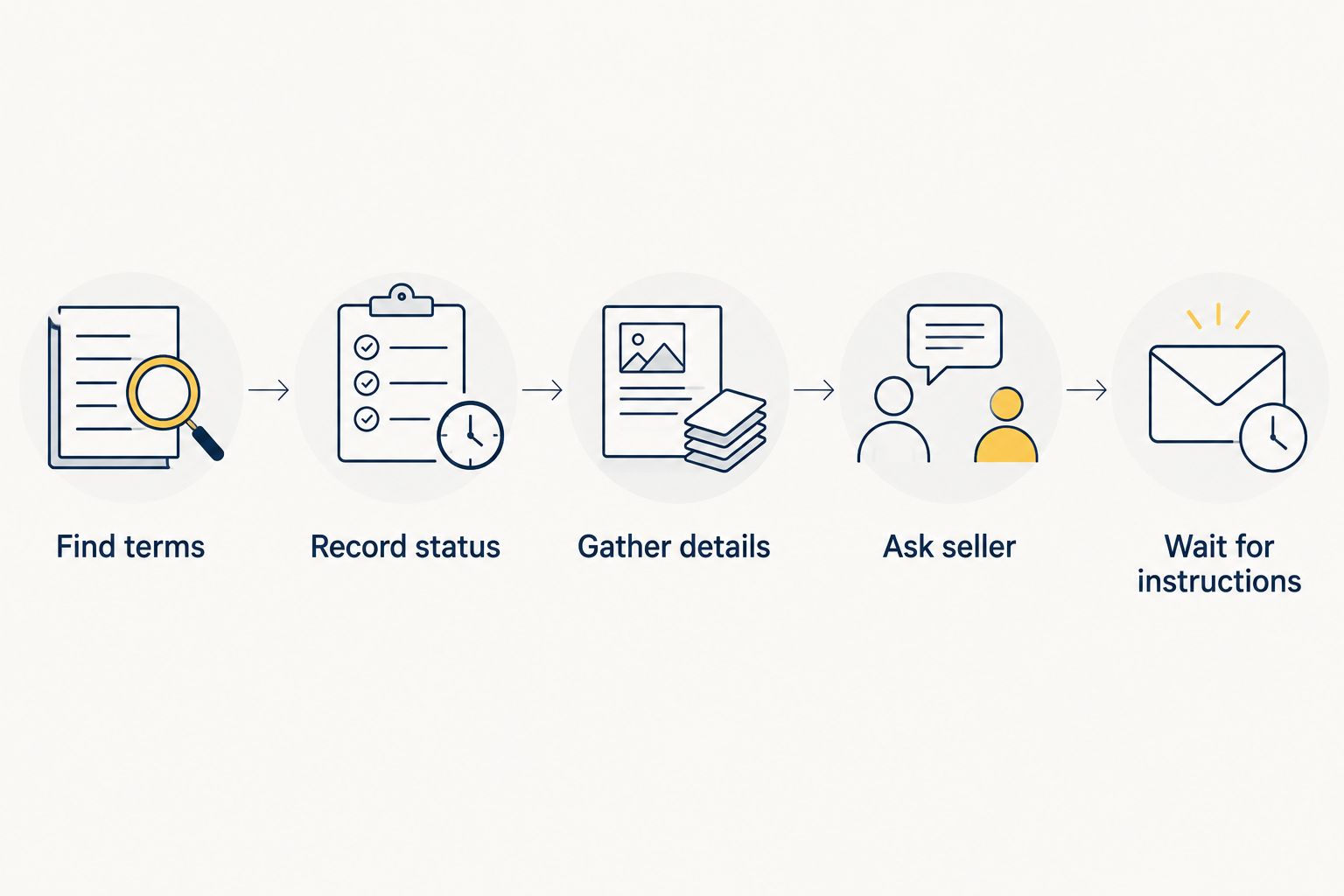
- Find the purchase terms. Use the terms associated with your order, not an assumption based on another seller's policy. Look specifically for wording about installation, activation, data use and changes of travel plans.
- Record the eSIM's status. Note whether you installed it, attempted to activate it or connected through it. Preserve any usage information available in the app or on your device.
- Gather the order details. Keep the confirmation and identify the plan you bought. If you bought a top-up, distinguish that transaction from the original eSIM purchase.
- Ask the seller for a written decision. State the facts plainly and ask which term applies. If a deadline appears in your purchase terms, submit the request within it.
- Wait for handling instructions. Do not delete the eSIM or treat a pending request as approval. Follow the seller's instructions for any remaining profile or requested evidence.
The order of these steps matters: first establish the rule, then document the facts that the rule addresses. In 2026, a screenshot of a usage screen can support a statement about data use, but it cannot prove what a seller's refund policy promises.
For A-sim travel eSIMs, the app's usage management gives you a place to check your data use. The purchase terms still determine whether that information is enough for a refund decision. If you need connectivity for a changed trip, resolve the existing purchase before treating a new plan as its replacement.
Why refund eligibility varies
There is no single answer that applies to every prepaid eSIM purchase. These are the details to match against your terms:
- Installation status: Did you add the eSIM to an iPhone or Android phone, or is it still uninstalled?
- Activation status: Did you attempt to start service, and what does the policy say about that event?
- Data use: Does the available usage record show consumption, and does the policy use data consumption as its test?
- Plan scope: Is the purchase for a single country, a region or global travel? Identify the exact plan in your request rather than referring to an eSIM generally.
- Top-ups: Did you add data after the original purchase? Ask whether the seller treats the transactions separately.
- Travel changes: Did you cancel the trip or change destination? Explain the change, then check whether the terms address it.
These factors help you describe the case. None independently guarantees a refund. The decisive document is the policy that applies to your transaction, not a general rule about eSIM technology.
What if the trip was cancelled before you used the eSIM?
A cancelled trip does not by itself prove refund eligibility in 2026. Tell the seller that the trip was cancelled, confirm the eSIM's installation and activation status, and ask which purchase term covers cancellation. Keep the response with your order record.
If the terms do not mention cancelled travel, ask for a decision rather than assuming silence means approval. The same approach applies if your destination changed: identify the plan you bought and the trip you now need connectivity for, without assuming one can be exchanged for the other.
What if the eSIM was activated but used no data?
Zero data use is relevant evidence, not an automatic refund decision. In 2026, check whether the purchase terms distinguish activation from data use, then give the seller an accurate account of both. If the policy uses the word activated without defining it, ask what event the seller means.
Do not claim that activation failed merely because you did not browse or open an app. Describe what happened on your phone: whether you installed the profile, tried to connect and saw any usage. That gives support the facts needed to answer the question the policy actually asks.
What if you topped up an eSIM you no longer need?
Ask about the top-up separately from the original plan. A-sim supports app-based top-ups, but no refund rule for an A-sim top-up is established here. Identify each transaction in your request and check the terms attached to each before assuming one decision covers both.
This distinction is useful when you are reviewing usage. A record showing no use of newly added data does not, on its own, describe the status of the original plan. Keep the order and top-up details separate so the seller can respond to the right purchase.
Before you buy your next travel eSIM
Check refund terms at the same time as destination coverage and phone compatibility. If a trip is uncertain, pay particular attention to what the terms say about an uninstalled plan, an installed plan and an activated plan. Save a copy of the terms presented with your purchase so you can refer to the wording later.
A-sim is best for travelers who want to manage travel eSIM usage and top-ups through an app; it is not a verified refund-first choice without its purchase terms. That is the practical comparison to make in 2026: app convenience answers how you manage connectivity, while the refund policy answers what happens when you never use it.
FAQ
Is a prepaid eSIM refundable if unused in 2026?
Only if the terms for your purchase permit a refund. Check how the seller defines unused before you submit a request.
Can I get a refund if I bought an eSIM but never installed it?
That depends on the purchase terms. Confirm that it was not installed and ask the seller which condition applies to your order.
Can I get a refund after installing an eSIM but before using data?
A refund depends on whether the seller's terms treat installation, activation or data use as the relevant event. Report each status accurately when you request a decision.
Does cancelling my trip make an unused eSIM refundable?
No automatic refund follows from cancelling a trip. Check whether your purchase terms cover cancellations and tell the seller what happened to the eSIM.
Should I delete an unused eSIM before asking for a refund?
No; ask the seller for instructions first. Deleting the profile does not prove that it was unused.
Does zero data usage guarantee an eSIM refund?
No. A zero-use record supports a statement about data consumption, but the purchase terms determine eligibility.
Is an unused eSIM top-up refundable?
Check the terms for the top-up transaction. Identify it separately from the original eSIM purchase when you contact the seller.
One last thing
The most useful question to send support is not simply whether an unused eSIM is refundable. Ask: Does your policy count my eSIM as unused at its current installation, activation and data-use status? Include your order details and the status of each. A written answer to that question addresses your purchase, not a generalization about prepaid eSIMs.