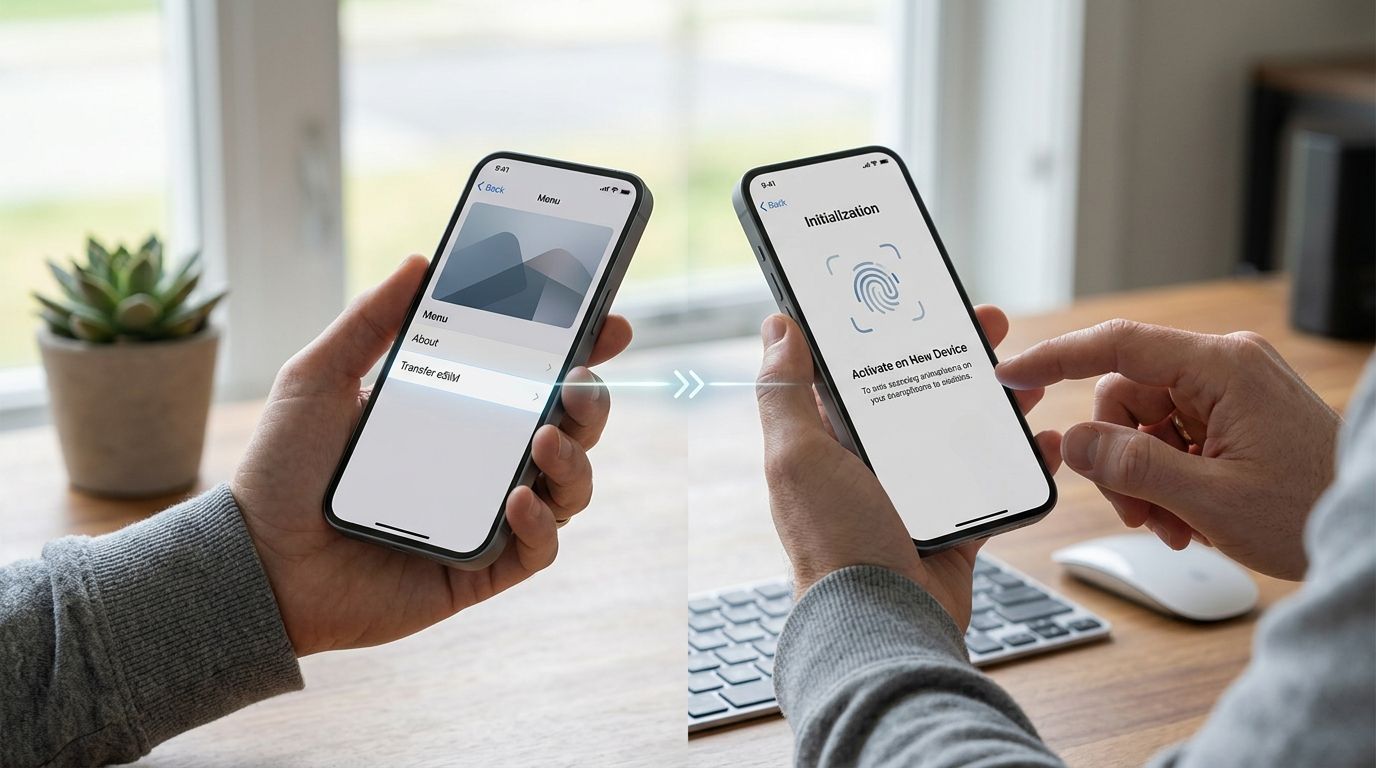
An eSIM replaces the physical SIM card slot on your phone with a digital profile you install in one tap, and by 2026 it is the default way most international travelers get connected the moment they land. This page answers whether it is actually worth it for your trip, when it is not, and what decides the difference.
- An eSIM is worth it for international travel in 2026 if your phone supports eSIM and you are visiting more than one country.
- A-Sim installs in one tap through the app or website and works on both iPhone and Android with no physical card swap.
- Skip an eSIM only if your device predates eSIM hardware or your phone is carrier-locked.
- iPhone models from the XS onward (2018) and most Android flagships from 2019 onward support eSIM natively.
- Top up and monitor data usage mid-trip in the app instead of hunting for a local SIM shop.
Why this matters
The short answer: yes, an eSIM is worth it for international travel in 2026 for the large majority of trips, because it removes the two biggest friction points of arriving in a new country. You skip the airport SIM kiosk, and you skip paying your home carrier's roaming rates for the whole trip.
The caveat nobody puts in the headline is hardware. eSIM is a physical capability built into the phone at manufacture, not something a software update adds later. Some phones sold in specific markets have the chip but the feature disabled by the carrier.
That single factor decides the question for most people. If your phone is unlocked and eSIM-capable, there is very little reason left in 2026 to queue at a SIM counter. If it is not, the rest of the conversation waits until you upgrade.
Is an eSIM worth it for international travel in 2026?
For any trip crossing two or more borders, an eSIM beats both a physical local SIM and home-carrier roaming on the three things travelers actually care about: how long setup takes, whether coverage follows you across borders, and whether you keep your home number. A-Sim installs through the app or the website in a single tap, and usage and top-ups are managed in-app.
| Option | Setup effort | Works across borders | Best for | Verdict |
|---|---|---|---|---|
| eSIM (A-Sim) | One tap, before or after landing | Yes, regional and global plans cover multiple countries | Multi-country trips, business travel | Buy |
| Physical local SIM | Requires a shop, ID, sometimes a queue | No, one card per country | Long stays in a single country | Hold |
| Home carrier roaming | Automatic, no setup | Yes, but priced as a convenience | Short emergency use only | Skip for daily data |
| Wi-Fi only | None | No coverage between stops | Very short city trips | Wait |
The one-line verdict: once your itinerary includes a second country, the physical SIM stops making sense and the eSIM starts.
The second reason the math tips toward eSIM in 2026 is recoverability. Lose a physical SIM and you are back at a shop. An eSIM profile lives in your account, so a replacement install or a transfer to a different handset happens from the app rather than from a storefront.
Global eSIM vs regional eSIM vs single-country eSIM
A-Sim sells global, regional, and single-country eSIM plans. Picking the right one is an itinerary decision, not a guesswork decision.
Global eSIM: best for open-ended, multi-region trips
If your route touches more than one continent, or if the country list is not finalized yet, a global plan is the one that survives itinerary changes. Backpackers, round-the-world travelers, and people working remotely from rotating bases fit here. Verdict: Buy if you are hitting three or more regions.
Regional eSIM: best for one continent, several countries
A swing through Southeast Asia, or a rail trip across Europe, sits squarely in regional territory. One profile, multiple borders, no reinstall at each crossing. Verdict: Buy if the whole trip stays inside one region. For a Europe-heavy itinerary, the best eSIM for Europe in 2026 breakdown covers the country-by-country detail.
Single-country eSIM: best for a focused trip
Two weeks in Japan, a work trip to the UK, a family visit to Mexico. If you are not crossing a border, you do not need to pay for coverage you will not use. Verdict: Buy if the trip is one destination, start to finish.
All three tiers run through the same app, so moving from a single-country plan to a regional one mid-trip is a change in the app rather than a fresh setup.
“If your phone supports eSIM, the only real reason to skip one in 2026 is planning to stay on Wi-Fi the entire trip.”
Why the value of an eSIM varies by traveler
Not every traveler gets the same return. These are the factors that move the answer:
- Phone compatibility. eSIM support began with the iPhone XS in 2018 and the Pixel 3 the same year. Older handsets and some budget models still ship without it.
- Carrier lock status. A phone locked to a home carrier can block eSIM installation until it is unlocked, which usually means one call before departure.
- Number of countries. One destination favors a single-country plan. Three or more favors regional or global.
- Data habits. Maps, messaging, and boarding passes need far less headroom than daily video calls or uploading footage.
- Local rules. A small number of countries restrict eSIM activation or require in-person registration, which changes the plan for that leg.
- Whether you need your home number live. Travelers who must stay reachable on their existing number run a dual-SIM setup rather than replacing the SIM entirely.
That last point is the one business travelers underestimate. Keeping calls and texts on the home number while data runs over the eSIM is standard dual-SIM behavior, and the dual-SIM setup guide walks through the configuration on both platforms.
Set up your eSIM before you fly
Install in one tap through the app or site, then manage data and top-ups as you go.
When an eSIM is not worth it
Three situations where the honest answer is no, or not yet:
- Your phone has no eSIM hardware. Released before 2018, or a budget model without the chip. No workaround exists short of a new device.
- Your phone is carrier-locked and you cannot unlock it before departure. Sort this out at home or plan around it.
- You are staying in one country for months. A long local contract can suit a multi-month stay better than short travel data, particularly if you need a local phone number for deliveries, banking, or ride-hailing verification.
Everything else — weekend city breaks, two-week holidays, multi-country work trips, cruises, extended nomad routes — lands on the yes side in 2026.
How long does it take to set up an eSIM?
Installation takes one tap from the app or the website, and it can be done before you leave home so the profile is already on the device when you land. The practical advice is to install on your home Wi-Fi rather than waiting for airport connectivity, because the download step needs a working internet connection even though the plan itself does not activate until you arrive.
Setup differs slightly between platforms. Android users can follow the step-by-step Android eSIM setup; iPhone users will find the equivalent one-tap flow documented in the iPhone guide.
Do I still need a physical SIM as a backup?
Not for most trips in 2026. Modern dual-SIM phones let you keep your home SIM in the tray, data switched off, while the eSIM handles everything abroad. A second physical card is only worth carrying if your destination has confirmed eSIM restrictions.
Does an eSIM work on both iPhone and Android?
Yes. eSIM works on iPhone models from the XS onward (2018) and on most Android phones released from 2019 forward, and A-Sim supports both. Open your settings and look for the option to add an eSIM before you travel — that single check confirms compatibility in under a minute.
What happens when the data runs out mid-trip?
You top up in the app. No store visit, no new card, no new install. Usage is visible in the app as you go, which matters most on long trips where a slow leak of background data is easy to miss until coverage stops.
FAQ
Is an eSIM worth it for international travel in 2026?
Yes for most trips. An eSIM installs in one tap, works across multiple countries without swapping cards, and skips the airport SIM queue. It is not worth it if your phone lacks eSIM hardware or your trip runs entirely on Wi-Fi.
Does an eSIM work on both iPhone and Android?
Yes. eSIM works on iPhone models from the XS onward (2018) and most Android phones from 2019 onward. Check your phone settings for the option to add an eSIM before departure.
Do I need to unlock my phone to use an eSIM?
If your phone is locked to a home carrier, it may block eSIM installation until unlocked. Contact your carrier before the trip to resolve it.
Can I keep my home number active with an eSIM installed?
Yes. Dual-SIM phones keep your home SIM active for calls and texts while the eSIM handles data. This is the standard setup for travelers who do not want to lose their number.
What happens if I run out of data on an eSIM?
You top up directly in the app, before or after the allowance runs out. There is no need to buy a new SIM or visit a store.
Is an eSIM better than roaming with my home carrier?
For everyday use on a trip, yes. Home-carrier roaming works best as an emergency backup, while a travel eSIM is built to be your primary data connection abroad.
Can I use one eSIM across multiple countries on a single trip?
Yes. Regional and global eSIM plans are built for multi-country itineraries and switch coverage as you cross borders without a fresh install each time.
Does an eSIM work on older phones?
Only if the phone shipped with eSIM hardware, which started in 2018 for iPhone and Android flagships. Older or budget models without that chip cannot install one.
One last thing
The detail most travelers miss is that eSIM support is decided at manufacture, not by a software update. Check your settings for the add-eSIM option before you leave the house, not at the departure gate, because that one check determines whether any of this applies to your 2026 trip at all. Do it tonight and the decision takes 60 seconds.