eSIM is safe for international travel in 2026 - the technology encrypts your carrier profile inside the phone's hardware and can't be swapped out the way a physical SIM card can. The actual risk isn't the eSIM standard itself; it's picking a provider with weak account security, or losing the device your travel data plan is tied to.
- eSIM is safe for international travel in 2026 - it runs on the same GSM authentication standard as physical SIM cards, just stored digitally.
- A-sim installs a travel eSIM in one tap and never requires removing a physical card a thief could steal or reuse.
- The real risk with eSIM travel plans is account security, not the SIM technology itself - use a strong password and lock your device.
- eSIM can't stop a phone from being stolen, but it does stop a stolen SIM from being pulled out and reused in another handset.
Why this matters
Travelers worry about SIM security for good reason - a stolen or cloned SIM can hand someone your number, your calls, and sometimes your two-factor codes. An eSIM changes the attack surface because there's no removable chip to pull out at a border checkpoint or a hotel room.
The profile lives in an embedded chip called the eUICC, provisioned remotely over an encrypted connection instead of printed onto a swappable card. Providers like A-sim install that profile through an app or a QR scan, so the phone never leaves your hands during setup. That's a meaningfully different security model than handing your passport and phone to a foreign carrier counter for a physical SIM.
None of this makes eSIM travel plans immune to every risk. It just moves the weak point from the hardware to the account layer - your login, your password, and whether your provider verifies you before making changes.
Is eSIM safe for international travel in 2026?
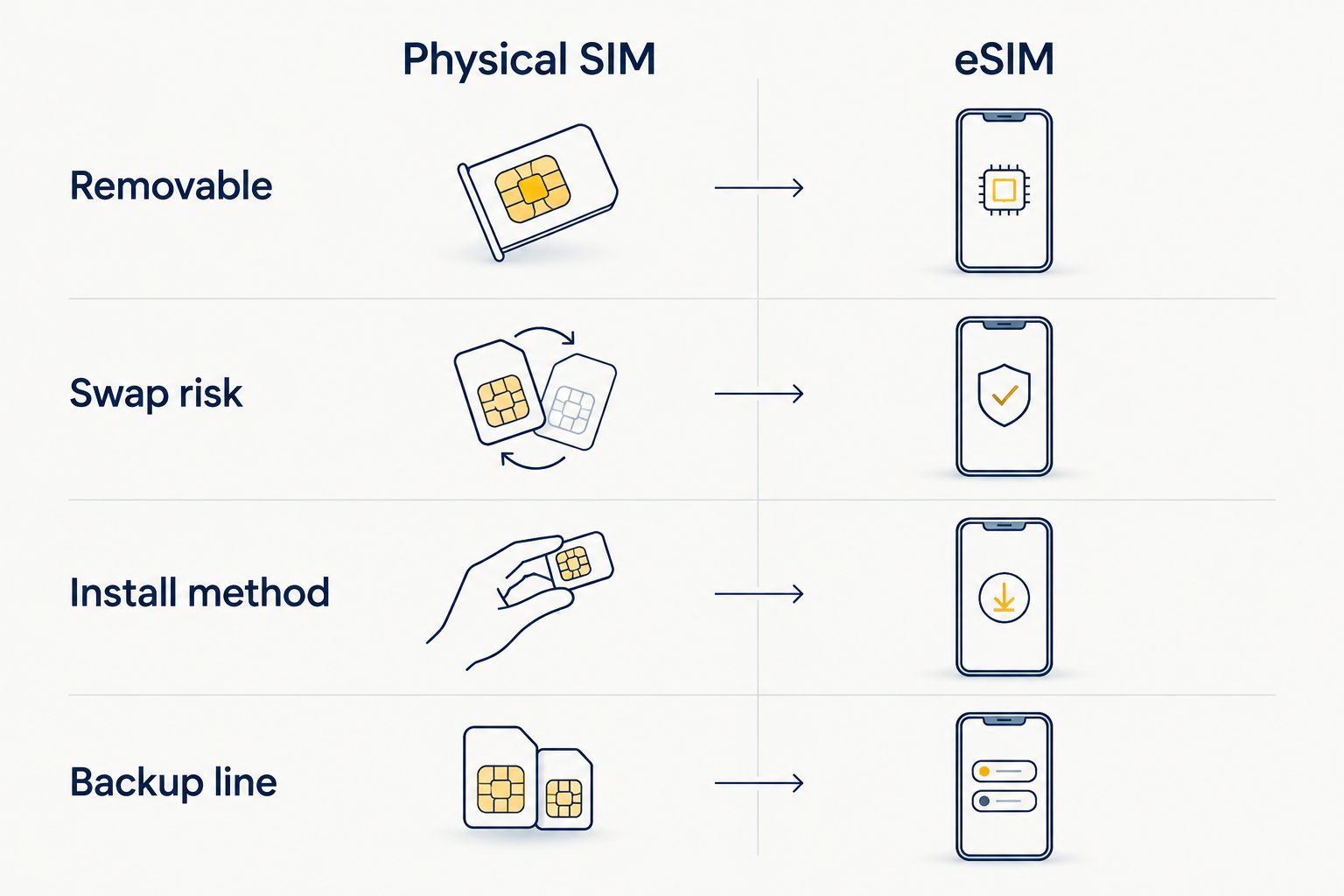
Yes. The eSIM specification uses the same encryption and authentication framework carriers have relied on for physical SIM cards for years, and no removable card means no SIM to steal, clone, or swap at a counter. The comparison below shows where the two formats actually differ on security, not on speed or coverage.
| Risk factor | Physical SIM | eSIM |
|---|---|---|
| Can be removed and reused in another phone | Yes | No |
| Vulnerable to swap fraud at a carrier counter | Yes, a known fraud target | Less exposed - most providers require app or account verification |
| Requires opening the phone or handling a tray | Yes | No, installed through an app or QR scan |
| Backup line while traveling | Needs a second physical slot | Two eSIM profiles can run on one phone at once |
The last row matters more than it looks. Running a home number and a travel eSIM side by side means you're never without a working line if one profile has an issue, and there's no tray to lose in the process.
Why eSIM safety varies by provider
The eSIM standard is consistent across carriers, but how a provider implements it is not. These are the factors that actually change your risk level:
- Account verification - whether the provider requires a password, email confirmation, or 2FA before any change to your profile
- Install method - app-based or QR-based setup keeps the process inside encrypted channels; anything asking you to sideload a file outside those channels is a red flag
- Lost-device support - how fast a provider can suspend or reissue a profile if your phone goes missing
- Network partners in your destination - a provider using established local carriers means fewer weak links in the chain
- App permission scope - what the companion app can access beyond managing your data plan
- Offline install window - being able to install the eSIM before you travel, on your home Wi-Fi, instead of on an unfamiliar airport network
“An eSIM profile can't be pulled out of your phone and dropped into someone else's.”
Install your travel eSIM in one tap
Activate an A-sim eSIM before you fly - nothing to remove, nothing to swap.
Can an eSIM be hacked remotely?
An eSIM's stored profile isn't the easy target - the encryption backing it matches the standard used by physical SIM cards for years. The more realistic attack path is your account login or a phishing attempt aimed at your provider's app, not the eSIM chip itself. Keep a unique password on your carrier account and you close off the path that actually gets used.
Is eSIM safer than a physical SIM card when traveling abroad?
On the specific risk of a stolen or swapped SIM, yes - an eSIM can't be physically pulled from the phone and reused, which removes a common fraud path at foreign carrier counters. It doesn't make a stolen phone recoverable on its own; check what happens to an eSIM if your phone is stolen for what actually protects the data plan versus the device.
Does eSIM protect against SIM swap fraud?
eSIM reduces exposure to swap fraud because there's no physical card for someone to request a replacement of at a store counter, but the account layer still needs its own protection. Running a physical SIM and an eSIM at the same time is one way travelers keep a backup line active without adding a second point of physical failure.
One last thing
The eSIM specification itself isn't new or experimental in 2026 - it's built on a standard the mobile industry finalized years ago and every major carrier now supports. If a provider ever asks you to install a profile outside its app or a QR code, that's the actual warning sign, not the eSIM format. Stick to app-based or QR installs and the technology does the rest.
FAQ
Is eSIM safe to use abroad in 2026?
Yes, eSIM is safe for international travel in 2026 because the profile is encrypted and stored inside the phone's hardware instead of on a removable card. The main risk is account security on the provider's end, not the eSIM standard.
Can someone hack into your eSIM remotely?
Directly hacking an eSIM profile is difficult because it uses the same authentication standard as physical SIM cards. Most real-world risk comes from weak account passwords or phishing attempts against the provider's app, not the SIM technology itself.
Is eSIM safer than a physical SIM card?
eSIM is safer against physical theft and swap fraud because there's no card to remove or clone at a counter. It doesn't replace basic phone security like a lock screen and a strong account password.
Does eSIM stop SIM swap fraud?
eSIM reduces SIM swap fraud because there's no physical card a fraudster can request a replacement for. Account-level verification with your provider still matters for full protection.
What happens if my phone gets stolen and I have an eSIM?
The eSIM profile stays tied to the stolen device unless you contact your provider to suspend or reissue it, similar to reporting a lost physical SIM. Device-level security like a passcode matters more than the SIM format at that point.
Can I keep a backup line active with eSIM for safety?
Yes, most eSIM-capable phones support two profiles at once, so you can keep a home number active alongside a travel eSIM. That gives you a working line even if one profile has an issue abroad.
Is it safe to install an eSIM before I travel?
Installing an eSIM before departure on your home Wi-Fi is safer than doing it on an unfamiliar airport network. Most providers support installing the profile in advance and activating it only once you land.
Does eSIM work without wifi during activation?
Initial eSIM download typically needs an internet connection, usually Wi-Fi, but activation of the data plan itself can happen later on the destination's cellular network. Check the provider's specific activation flow before you fly.