Best for a Vietnam-only trip: a single-country eSIM. Best for neighbouring-country stops: a regional eSIM. Best for a wider international itinerary: a global eSIM. A-sim suits travellers who want app-managed travel eSIMs; confirm Vietnam coverage and the selected plan’s terms before buying for your 2026 trip.
- The best esim for vietnam matches your route, phone compatibility, data needs and travel dates.
- Choose a single-country eSIM for Vietnam-only travel; choose regional coverage for a multi-country itinerary.
- A-sim suits travellers who want travel eSIM purchasing, usage management and top-ups through an app.
- Check Vietnam inclusion, supported networks, activation rules and hotspot terms before choosing any plan.
Why this matters
Your itinerary determines which eSIM makes sense. A Vietnam-only holiday, a Southeast Asia circuit and a round-the-world trip need different coverage footprints—not necessarily different amounts of data.
The wrong footprint creates unnecessary complexity. A country-specific plan needs another connectivity arrangement after you cross a border; a regional or global plan still needs an exact country-list check. Neither a broad coverage label nor a familiar provider name proves that the selected package fits your journey.
For 2026, choose the plan first and judge the provider against it. Network access, validity, activation and tethering rules matter more than an unsupported claim to be the fastest.
What makes the best eSIM for Vietnam?
Use these criteria before comparing coverage types:
- Vietnam coverage: Confirm that Vietnam appears in the exact package’s destination list. For onward travel, check every additional country separately.
- Phone compatibility: Check your exact device model, regional version and carrier-lock status. An eSIM-capable phone still needs permission to use another provider.
- Network access: Read the listed Vietnamese network information and check coverage along your route, especially outside cities.
- Validity and activation: Identify what starts the validity period: purchase, installation or connection. Match the expiry date to your final travel day.
- Data and hotspot rules: Check the allowance, any fair-use restrictions and whether tethering is permitted. Laptop use needs its own check.
- Usage management: Look for a clear way to check remaining data and understand the top-up process before departure.
Choose coverage you can verify over a plan label that sounds generous. A larger country list does not establish better signal in Vietnam.
Vietnam eSIM options at a glance
These are coverage approaches, not named product tiers. Choose the row that matches your route, then inspect the specific package.
| Ranked option | Best for | Standout feature | Key limitation |
|---|---|---|---|
| Single-country travel eSIM | A Vietnam-only itinerary | Coverage scope matches one destination | Onward countries require another arrangement |
| Regional travel eSIM | Vietnam plus neighbouring-country stops | One coverage footprint for included regional destinations | Regional labels do not establish which countries are included |
| Global travel eSIM | Vietnam within a wider international itinerary | Coverage spanning included destinations across regions | A broad footprint does not establish local network quality |
For a 7-day Vietnam-only itinerary, start with the single-country category. For a 14-day trip split between Vietnam and another country, compare regional coverage against separate country plans. For a 21-day itinerary crossing several regions, assess global coverage alongside the regional alternatives.
Those durations are planning examples, not recommended package sizes. Your travel dates and actual usage determine the allowance and validity you need.
1. Single-country eSIM: best for Vietnam-only travel
A single-country travel eSIM covers the destination specified by its package. For a Vietnam-only itinerary, this is the clearest starting point because you can focus your checks on Vietnam coverage, validity and data rather than a long country list.
A-sim offers single-country travel eSIMs alongside regional and global options, with purchasing through its website or app. Check that the selected package explicitly includes Vietnam before treating it as a match for your trip.
Single-country eSIM pros:
- Keeps the coverage decision focused on one destination.
- Makes it straightforward to compare validity against your Vietnam dates.
- Avoids choosing a wider coverage footprint solely for countries you will not visit.
Single-country eSIM cons:
- Does not solve connectivity for onward destinations outside its coverage.
- Still requires checks for network access, hotspot use and activation conditions.
- A Vietnam destination label alone does not guarantee reception at every stop.
Best for: Travellers whose mobile-data needs stay within Vietnam.
For your 2026 shortlist, separate city use from route-wide requirements. Staying in Hanoi or Ho Chi Minh City presents a different coverage question from travelling through rural areas or taking a mountain route. Check the listed network’s coverage information against the places you actually plan to visit.
Do not add a regional plan merely because your flight connects elsewhere. First decide whether you need mobile data during that connection; airport Wi-Fi and your existing arrangements are separate considerations.
Verdict: Buy a single-country eSIM for Vietnam-only travel once its coverage and terms match your itinerary.
2. Regional eSIM: best for Vietnam plus nearby countries
A regional travel eSIM groups specified countries into one coverage package. It fits an itinerary that includes Vietnam and other destinations within that package’s country list.
The useful feature is coverage continuity across included destinations—not a promise that every border crossing or network connection requires no action. Read the setup instructions and check whether the same installed profile serves the whole route.
Regional eSIM pros:
- Groups included destinations into one coverage decision.
- Lets you assess the full itinerary rather than only your Vietnam stop.
- Provides a useful alternative to arranging a separate plan for each country.
Regional eSIM cons:
- A regional name does not guarantee that every nearby country is included.
- Network access and service conditions need checking for each destination.
- Shared validity must cover the whole journey, not just your Vietnam dates.
Best for: Travellers combining Vietnam with other included regional destinations.
Write down every country where you need data, including a transit stop only when connectivity there matters. Then compare that list with the package’s exact inclusions. Do not infer coverage from a map illustration or the word Asia.
A-sim offers regional travel eSIM options, but the selected package’s country list remains the deciding check. App-based management is useful only after the coverage fits; it cannot compensate for a missing destination.
For a closer look at this itinerary type, read the guide to the best eSIM for Southeast Asia.
Verdict: Buy a regional eSIM when every required destination and travel date fits the same package.
3. Global eSIM: best for Vietnam on a multi-region trip
A global travel eSIM covers the destinations specified in an international package. It belongs on your shortlist when Vietnam is one stop within a journey spanning several regions.
Treat global as a coverage category, not a guarantee of universal service. Check each country and the network details that matter at each stop.
Global eSIM pros:
- Brings destinations across regions into one coverage comparison.
- Offers an alternative to assembling several country-specific arrangements.
- Fits itinerary planning that extends well beyond Southeast Asia.
Global eSIM cons:
- Requires careful checking of a broader destination list.
- Does not establish better Vietnamese coverage than a narrower package.
- Needs a validity period that accommodates the entire planned journey.
Best for: Travellers visiting Vietnam as part of a multi-region itinerary.
For 2026 travel, compare a global package with the actual combination of country or regional plans you would otherwise need. Focus on destination inclusion, allowance, expiry and management requirements. Do not assume that the broadest option is automatically the simplest for your particular route.
A global plan also needs the same service checks as a single-country plan. Confirm hotspot permissions, calling features and any data restrictions rather than carrying assumptions from one package to another.
Verdict: Hold on a global eSIM unless your itinerary needs its wider coverage and every destination checks out.
Set up your Vietnam eSIM without mixing up your lines
Complete the compatibility and activation checks while you still have a dependable internet connection. Installation and the start of validity are separate questions; follow the selected provider’s instructions for both.
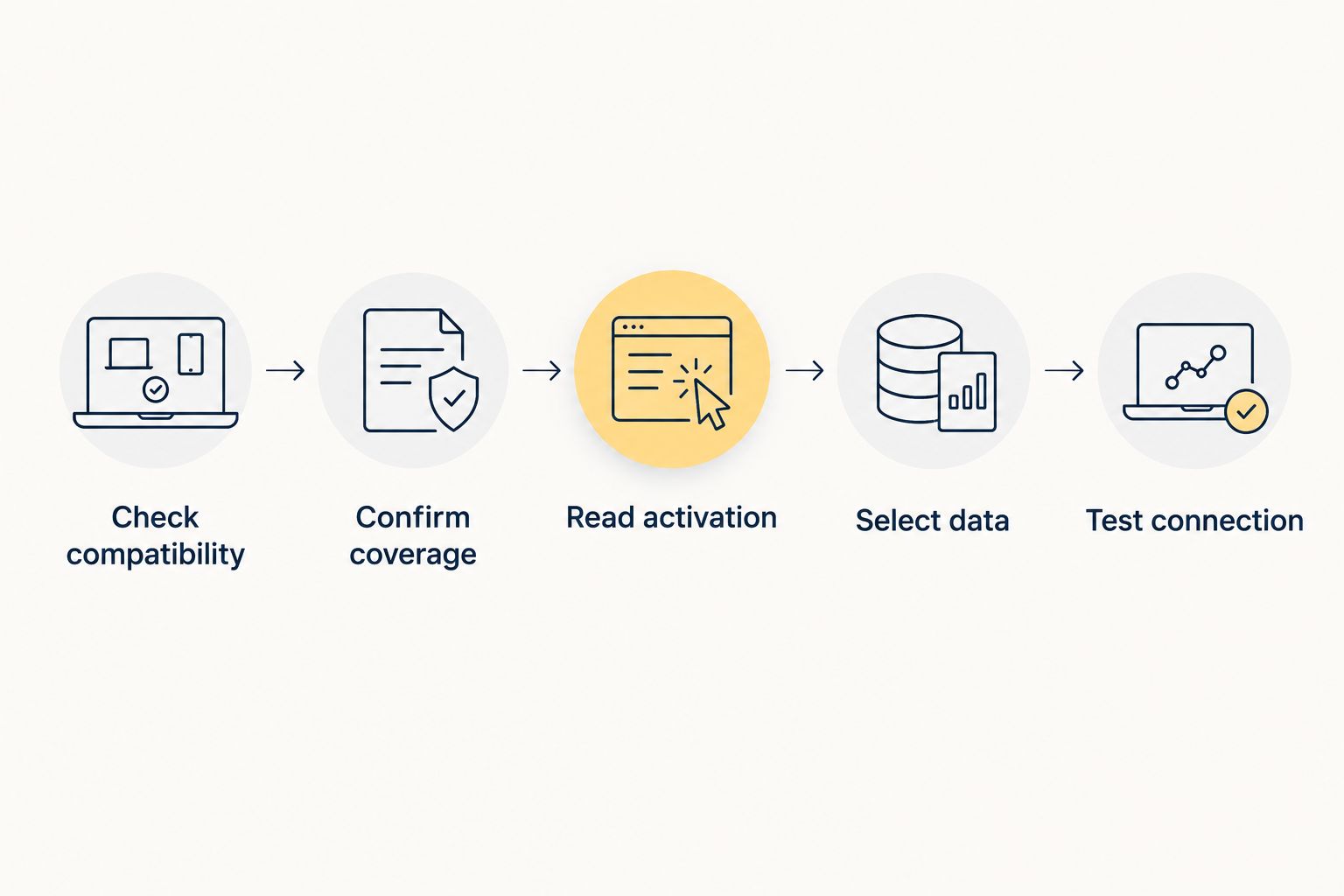
Use this sequence:
- Check compatibility: Confirm eSIM support for your exact phone and verify that it can accept another provider.
- Confirm coverage: Check Vietnam inclusion, route coverage, allowance, validity and hotspot terms.
- Read activation: Identify when validity begins before installing or enabling the plan.
- Select data: Choose the travel eSIM as your mobile-data line when instructed, and review home-line roaming settings.
- Test connection: After activation, turn off Wi-Fi briefly and check that mobile data works.
Keep your home number and your travel-data line conceptually separate. A data connection does not establish that your travel package includes ordinary calls, SMS or a Vietnamese phone number. Check those features explicitly if hotels, drivers or account verification depend on them.
If you leave your home line active, review its roaming and automatic data-switching settings. Selecting the travel eSIM for data does not change your home carrier’s terms for calls or messages.
Match data to your habits, not just your trip length
A week of messaging and maps is not the same workload as a week of video uploads and laptop tethering. Review your phone’s recent mobile-data usage by app, then adjust for activities you expect to add while travelling.
Use these checks:
- Navigation: Download offline maps before departure and keep accommodation addresses accessible offline.
- Media: Review photo backups, video uploads and automatic downloads before using mobile data.
- Work: Check hotspot permission and account for laptop updates or cloud syncing.
- Top-ups: Understand how to add data before the allowance runs out, including how you will get online to complete the process.
A-sim travel eSIMs support usage management and top-ups through the app. Check the selected package’s top-up conditions; adding data should not be treated as proof that the original validity period also extends.
How these options are ranked
This ranking prioritizes itinerary fit, then compatibility, network information, validity, data conditions and management. It ranks coverage approaches rather than claiming a measured speed winner.
Single-country comes first because it matches a Vietnam-only search most directly. Regional comes next for nearby-country travel; global serves the distinct case of a wider international itinerary. None of those positions establishes that one package has better reception than another.
Which Vietnam eSIM should you choose?
For a Vietnam-only trip in 2026, start with a single-country eSIM and verify the package before buying. Choose regional coverage when your nearby-country stops are included, or global coverage when your itinerary genuinely spans regions.
A-sim is best for travellers who want travel eSIM purchasing, usage management and top-ups through an app. For Vietnam, make destination inclusion and plan conditions your final decision—not the convenience of the purchase alone.
FAQ
What’s the best eSIM for Vietnam in 2026?
A single-country eSIM is the best starting point for a Vietnam-only itinerary. Choose regional or global coverage instead when your onward destinations are included and the package fits your travel dates.
Is a regional eSIM better than a Vietnam-only eSIM?
A regional eSIM is a better fit when you need data in Vietnam and other countries included in the same package. For Vietnam-only travel, compare the specific allowances and conditions rather than assuming broader coverage is better.
Can I use a Vietnam eSIM on my iPhone or Android?
You can use a travel eSIM on a compatible phone that permits service from the selected provider. Check your exact model, regional version and carrier-lock status before purchasing.
Does a Vietnam travel eSIM include a local phone number?
A travel eSIM does not automatically include a Vietnamese phone number. Check whether the selected package includes ordinary calls and SMS or provides data only.
Can I install my eSIM before arriving in Vietnam?
Install before arrival only after checking the provider’s installation and activation instructions. The important distinction is whether installation starts validity or whether another event starts it.
Can I share Vietnam eSIM data with my laptop?
You can share data when both your phone and the selected package permit hotspot tethering. Check hotspot restrictions and account for laptop downloads, updates and cloud syncing.
Will my eSIM work everywhere in Vietnam?
No mobile plan guarantees reception everywhere in Vietnam. Check the listed network’s coverage against your route and keep essential maps and booking details offline.
One last thing
Check expiry as carefully as the data allowance. Remaining data does not establish that a package remains usable after its validity ends, and a top-up does not automatically establish an extension.
Before your 2026 departure, save the activation instructions, plan details and accommodation address offline. Those are the details you need when the connection you are trying to set up is not working yet.